
Reporting of process emissions in paint shops and mechanical workshops in the KOBiZE system
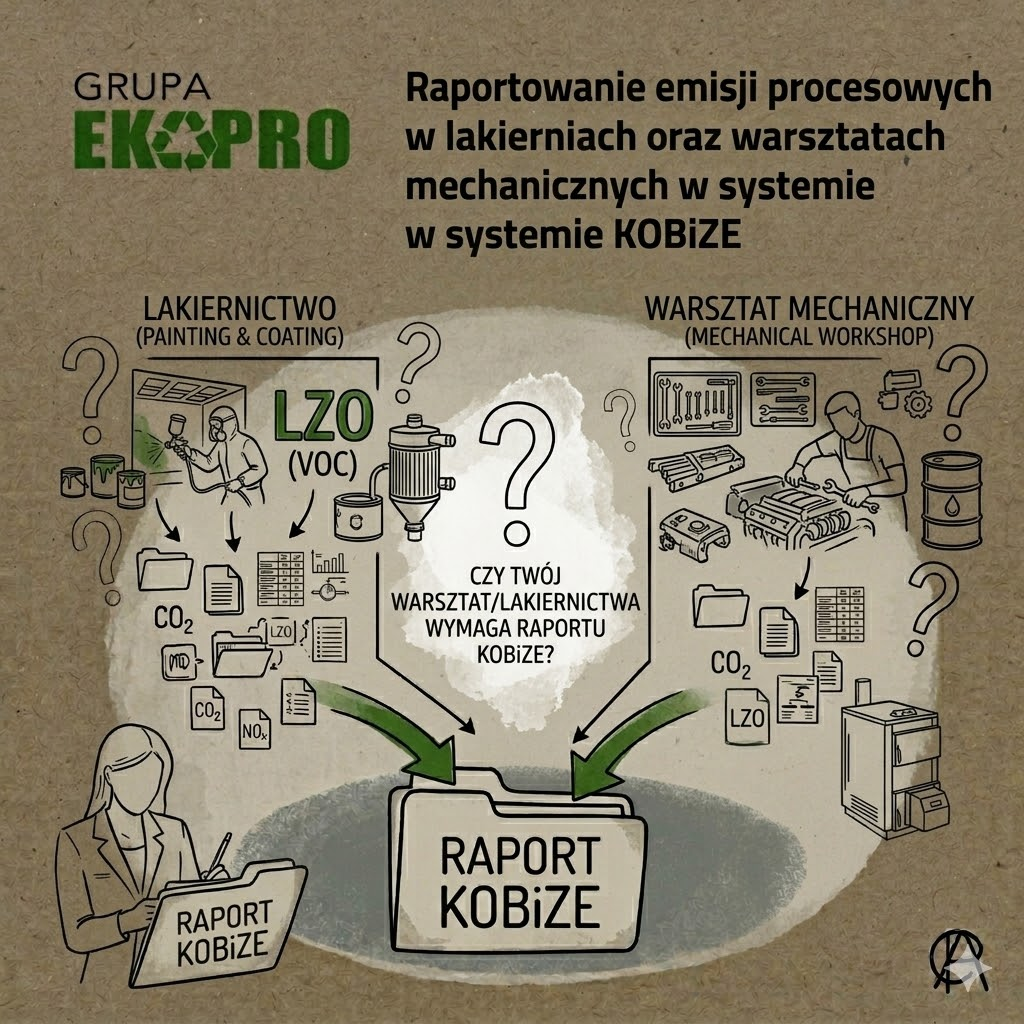
The biggest mistake made by owners of paint shops and mechanical workshops is to identify the KOBiZE report exclusively with the boiler, furnace or company cars. In practice, the reporting obligation very often also applies to the technological processes themselves, if they cause emissions into the air. In paint shops and workshops, such sources of emissions may be, among others, the processes of surface preparation, degreasing, application of varnishes, primers and thinners, drying of coatings and use of other preparations containing organic solvents. The national database makes it clear that the report is submitted by the environmental user whose activities cause emissions, and the „Emissions” section of the report is used to enter data on emissions to air from installations and other sources. This means that in a paint shop, it is not only the heating of the hall that is an issue, but also the process emissions associated with the paint service itself.
What process emissions occur in paint shops and workshops?

In practice, the most important area is emissions of volatile organic compounds, including NMLZOs, arising from the use of varnishes, paints, primers, removers, thinners and other chemicals used in painting and preparation processes. The KOBiZE materials explicitly indicate that entities reporting to the National Database must analyse whether substances discharged into the air from operated installations qualify as NMLZOs, and the reporting must show the sum of all pollutants included in this group. For paint shops, this means looking not just at the chimney or fan, but at the whole process where solvents evaporate into the air. In bodyshops, the problem particularly arises where, in addition to standard mechanics, bodywork repairs, touch-ups, refinishing of body parts or cleaning of parts with process chemicals are carried out.
Does a small paint shop or workshop also have to report to the KOBiZE?
Yes, very often yes. The obligation is not determined by the scale of the facility or the number of employees, but whether the activity causes emissions. KOBiZE indicates that the annual report is prepared by the entity using the environment whose activities cause emissions, and if the obligation is related to the operation of the installation, the report is submitted by the operator of the installation. At the same time, Biznes.gov.pl reminds that an installation emitting gases or dust into the air may require a notification to the environmental protection authority or even an emission permit, depending on the type and scale of the emission. This means that a small paint shop or workshop should not assume that „they are too small for the KOBiZE”. In practice, a small facility may have simpler data than a large industrial installation, but the obligation to report process emissions from either painting or solvent use may still exist.
How to prepare a process emissions report without errors?
The safest approach is to collect data not only on fuels and heating equipment, but also on all preparations and processes that realistically cause emissions into the air. In a paint shop and workshop, this usually means analysing the consumption of varnishes, primers, hardeners, thinners, removers and other VOC-containing products and then assigning them to the correct environmental use and the corresponding emission source in the report. The KOBiZE provides separate supporting material for installations where organic solvents are used and for the classification of NMLZOs, which shows that this area is treated as separate and requires proper balancing. From the entrepreneur's point of view, the most important conclusion is simple: the KOBiZE report for a paint shop and mechanics' workshop should not be limited to fuel combustion sources, as it is the process emissions that are often the most characteristic and most often overlooked element of the obligation here.
Can a mechanical workshop without a paint shop also have a KOBiZE obligation?
Yes, if its activities cause emissions, for example from fuel combustion installations or from technological processes involving the use of substances emitted into the air.
Does a paint shop have to report to the KOBiZE?
Very often, yes, because painting processes can cause emissions into the air, and a report is submitted by the entity whose activity causes the emissions.
Do VOC emissions need to be included in the report?
Yes. The NOBiZE materials indicate that the entity should analyse whether substances emitted from the installation qualify as NMLZOs and report them accordingly.
Can a small paint shop be exempted from reporting just because it is small?
There is no such general rule. The obligation is determined by the fact of causing emissions, not the size of the company itself.
Might a paint shop also need a notification or emission permit?
Yes. An installation emitting gases or dust into the air may require either a notification or a permit, depending on the type and scale of the emissions.
If you want to check whether the process emissions at your paint shop or mechanical workshop have been correctly identified and included in the KOBiZE, it is worth verifying this before the end of February, and not only when filling in the report. Details can be found under Contact page there, you can describe your business and match the scope of support to your company's real issuing obligations.

 Polski
  English (UK)
  Deutsch
  Українська