
ROP / EU EPR for Polish e-commerce - in which countries online sales alone trigger obligations packaging?
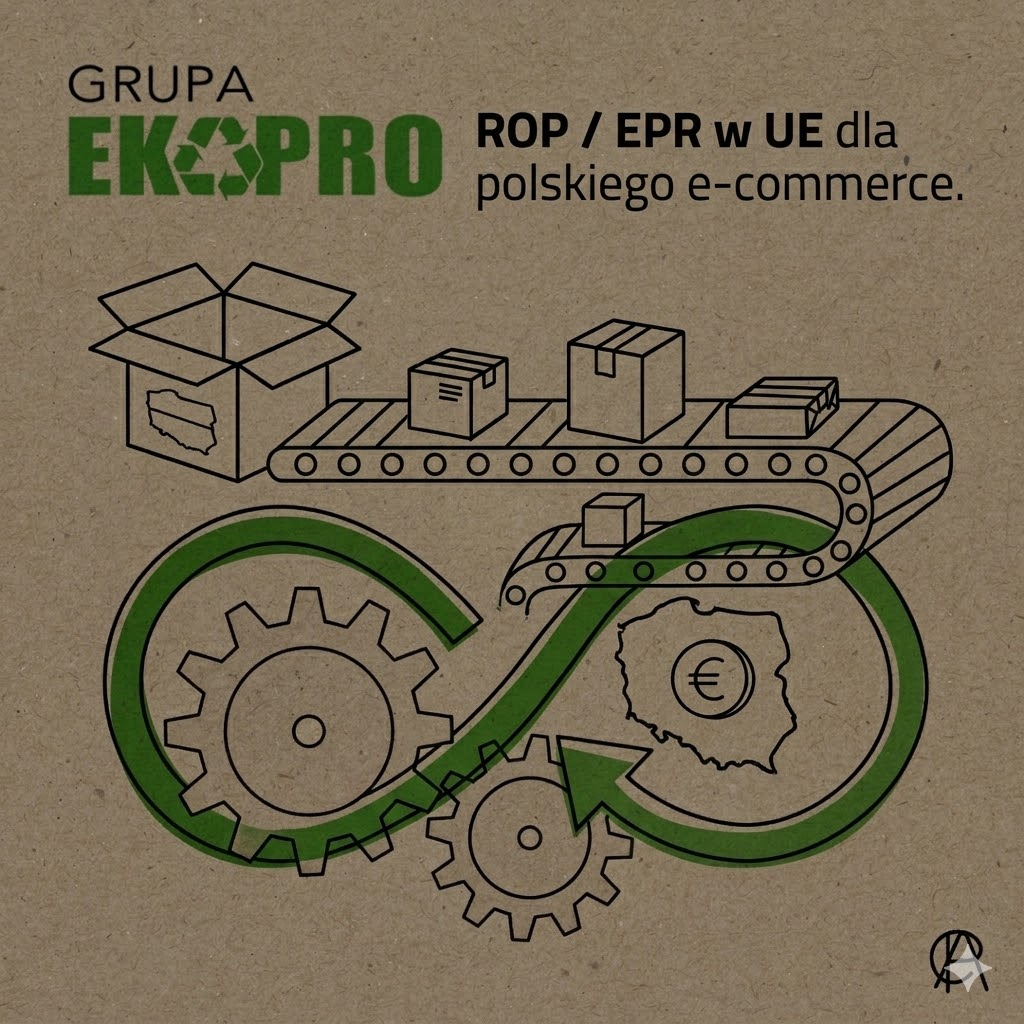
For Polish e-commerce, the most important rule is simple: online sales to another EU country are often enough to trigger local packaging obligations, even if the company has no warehouse, branch or employees there. In practice, this is the case if a country recognises an online retailer, importer, first distributor or distance seller as a „producer” or responsible for packaging placed on its market. At EU level, the direction is clear: the PPWR tidies up the rules for the whole EU, but until the regulation is fully applied and still in the area of enforcement, national registers, EPR organisations and local definitions of „introducer” are key. Therefore, the answer to the question „in which countries does online sales alone trigger obligations?” is: in practice, this must already be assumed at least for Germany, France and Spain, and in many models also for Belgium and other EU markets.
Germany, France and Spain - the markets where e-commerce is most likely to fall into EPR right from the start
Germany are the most obvious example today: The ZSVR points out explicitly that if the you commercially distribute packaged goods in Germany, you must register with LUCID, and when registering as a „producer” are also considered importers and online/mail order companies. If a package is subject to the participation system, registration alone is not enough and it is still necessary to conclude a contract with the system and report on packaging volumes. France is also a high-risk market for cross-border e-commerce, as the French environment ministry indicates that the REP rule applies to producers of regardless of the means of sale, and distance selling platforms acting as intermediaries can take over the REP's duties if the producer does not perform them; and the REP itself means joining an eco-organisation and paying a financial fee. Spain has in turn regulated this area very clearly for packaging: product manufacturers or their authorised representatives must register with the Registro de Productores de Producto - Sección envases, and a foreign entity placing packaged products on the Spanish market is required to appoint an authorised representative in Spain; if it fails to do so, responsibility may pass to the first entity in Spain or, in certain cases, to the e-commerce platform.
Belgium and other EU countries - why not just check LUCID
In practice, a Polish online shop should not limit its analysis to Germany alone, as similar logic also works in other markets. Belgium is a good example that self placing or importing packaging or packaged products on the domestic market triggers EPR responsibility, including funding for packaging management, joining an EPR organisation and reporting on packaging tonnes. This demonstrates an important point: in the EU, the issue is not just „do I have a local registration number”, but also whether my cross-border model makes me the local packaging agent on the delivery country side. Therefore, the safest approach for Polish e-commerce is as follows: treat each country to which you regularly send B2C orders as a separate compliance area and verify that your online sales there do not put you in the role of a manufacturer, importer, first distributor or an entity obliged by a platform or representative.
What this means for Polish e-commerce in practice
From the perspective of the online shop owner, the most important thing is that online cross-border sales alone can trigger packaging obligations without any „big” presence in the country. If you sell to the EU under your own brand, send orders to consumers, use fulfilment or marketplaces, you need to analyse each market separately: where you need registration, where EPR organisation, where reporting and also a local representative. The biggest mistake is to assume that because a company already has a BDO in Poland or a LUCID in Germany, the topic is closed throughout the EU. It isn't. This is why the article does not give one „magic list of countries”, but shows the correct logic: Germany, France and Spain are mandatory starting points for any Polish e-commerce seller in the EU, while Belgium and other markets require a further audit of the sales model.. It is this stage that most often leads to viable enquiries, as companies quickly see that EPR/ROP in the EU is not a single registration, but ongoing compliance management across multiple jurisdictions.
Frequently asked questions
Does simply sending parcels to Germany trigger packaging obligations?
Very often, yes. The German ZSVR points out that if you commercially distribute packaged goods in Germany, you must register with LUCID, and online retailers are directly covered.
Does France's REP also cover online sales?
Yes. The French ministry points out that the REP principle applies irrespective of the means of sale, and distance selling platforms can take over if the manufacturer does not.
Do sales to Spain require local packaging registration?
It may require that. Spain maintains a register of product manufacturers in the packaging section, and a foreign entity introducing packaged products into Spain may be required to act through an authorised representative.
Does BDO in Poland take care of the EU-wide EPR topic?
No. BDO concerns obligations in Poland. Cross-border sales may trigger packaging obligations in other EU countries in parallel.
Is it possible to identify one closed list of countries where online sales are triggering EPR?
Not in a simple way. The direction is EU-wide, but the practical obligations are still national and depend on whether, in a given country, the online retailer is recognised as a manufacturer, importer, first distributor or platform liability entity
You have doubts as to whether your cross-border retailer should implement a ROP / EPR in the EU, Which countries do you need to register in and how to arrange packaging obligations in multiple markets at the same time? Contact us Ekopro Group supports companies in ROP/EPR within the EU, helps you analyse your sales model, sort out registrations, reporting and packaging obligations, and answers questions about cross-border e-commerce. Go to „Contact” and make use of our support.

 Polski
  English (UK)
  Deutsch
  Українська