
Verification of NOBiZE reports by Marshal Offices
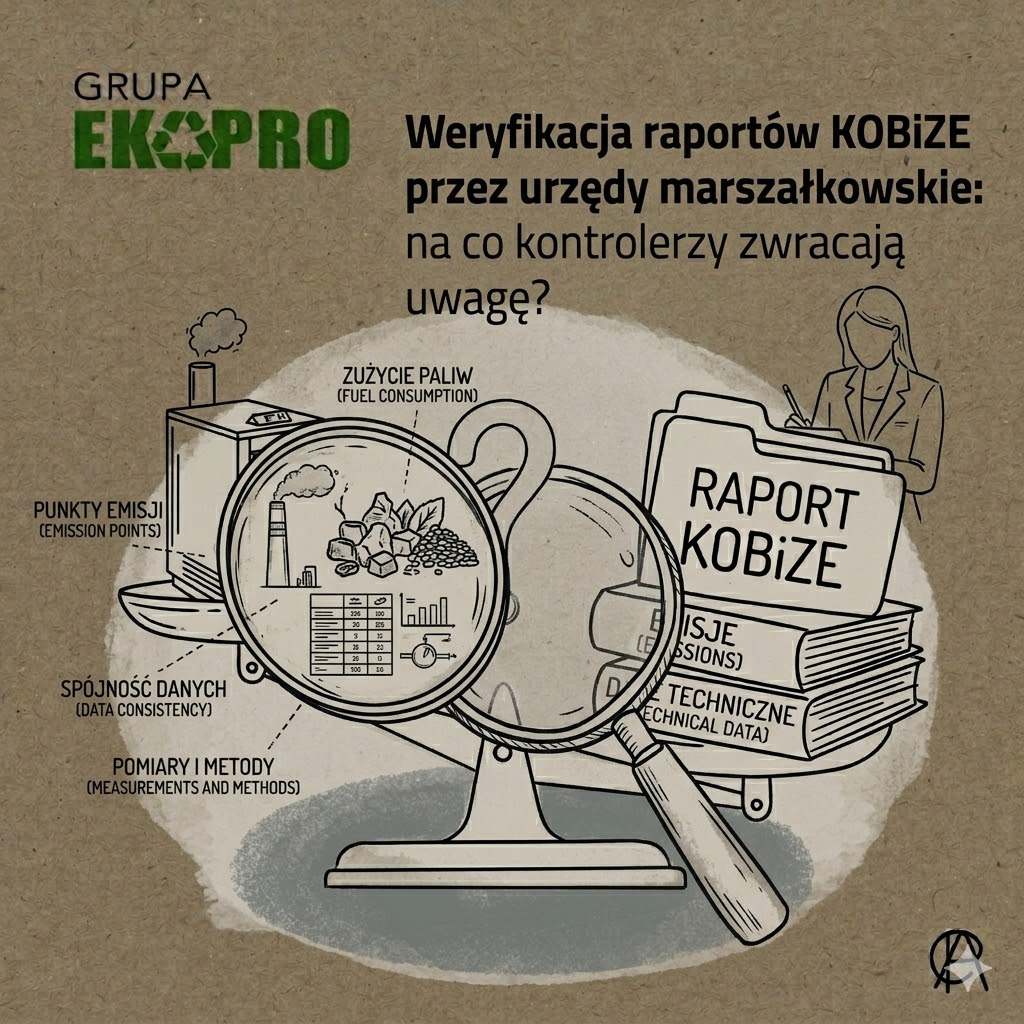
Many entrepreneurs treat the KOBiZE report as a separate technical obligation which, once sent, „disappears” into the system. In practice, this approach is risky. The data reported to the National Database are closely linked to environmental settlements, and the KOBiZE system itself enables the generation of a fee schedule precisely on the basis of the data from the report. This means that the marshal's office can very easily spot discrepancies between what a company reports to the KOBiZE and what it later shows in its environmental charges. In addition, the lists are submitted to the marshal's office by 31 March, i.e. shortly after the deadline for the KOBiZE report for the previous year, which expires at the end of February. In practice, the inspectors therefore look not only at the form itself, but at the entire consistency of the emission data in the entrepreneur's documentation.
Compatibility of the KOBiZE report with the fee schedule
The first thing that attracts the attention of the office is the conformity of the report with the list containing information on the scope of use of the environment and the amount of fees due. The Ministry of Climate and Environment reminds that such a list is submitted to the Marshal once a year by 31 March, and the KOBiZE instructions explicitly show that the report can be the basis for generating the fee list. This means that differences in emission volumes, types of substances, number of emission sources or places of environmental use are one of the most obvious warning signals. The NIK audit of the marshal's office's activities, moreover, explicitly showed that verification of the environmental fees consisted in checking the completeness and correctness of the lists. From the company's perspective, the most important conclusion is simple: if the KOBiZE report and the fee schedule do not tell the same story about emissions, the office will notice this very quickly.
Source data: fuels, installations, emission sites
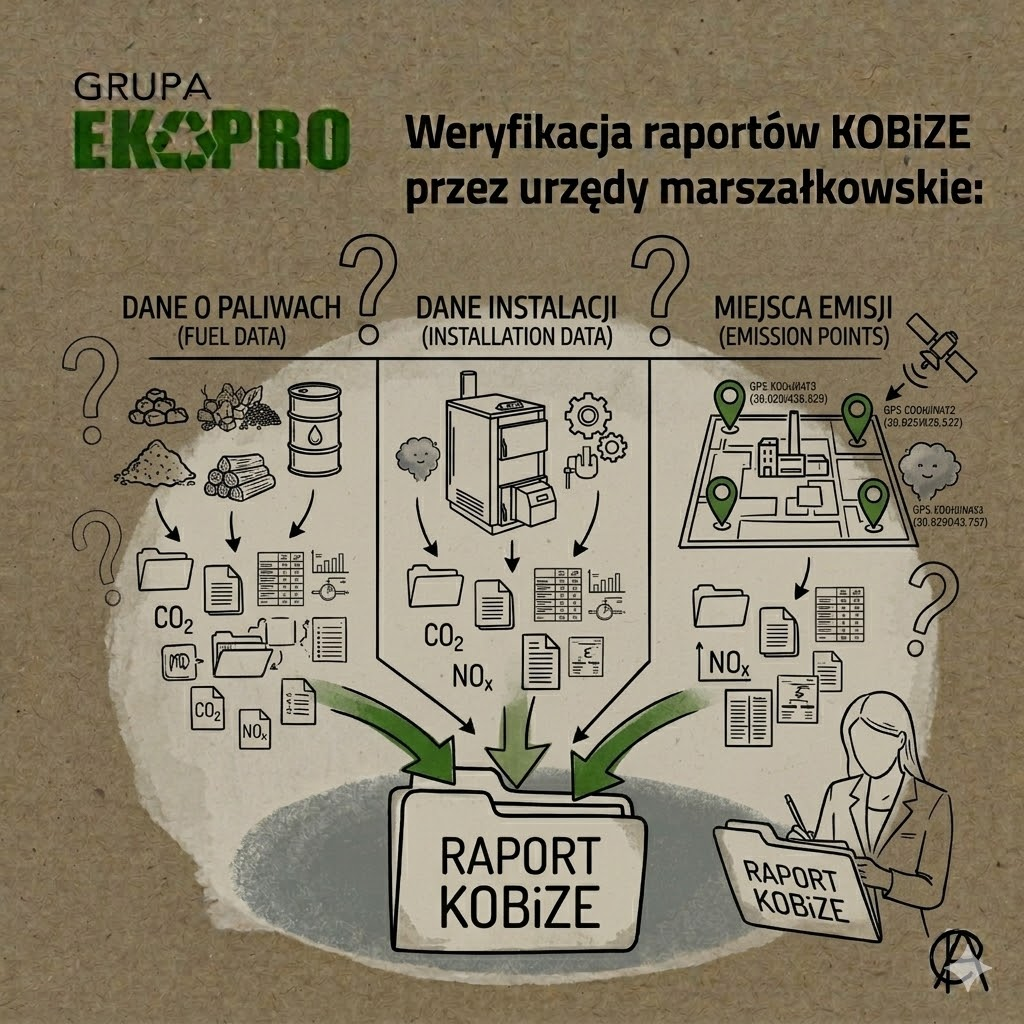
The second key area is the reliability of the source data from which the report is built. The KOBiZE defines a place of environmental use as a specific location where the activity causing emissions is carried out. In practice, therefore, inspectors pay attention to whether the company has correctly assigned combustion sources, processes or equipment to the correct locations and whether the report covers all locations where emissions actually occurred. Equally important is the consistency of the report with documents confirming the fuel consumption, technical parameters of the installation, the operating time of the equipment and the basis of the calculations adopted. This is particularly important for small boilers, generators, paint shops, process plants and other emissions that are sometimes overlooked because entrepreneurs treat them as „too small”. In practice, the inspector does not start with the mathematics of the emissions, but with a simple question: do the sources and volumes shown have a logical basis in the real activities of the company.
The most common irregularities that may attract the attention of the office
Three types of non-compliance are usually the most suspicious for the authority: failure to include some of the emission sources, a discrepancy between the KOBiZE report and the fee schedule, and unreliably prepared emission data. The post-audit materials show that the unreliable preparation of a list containing information on the scope of use of the environment was one of the violations found, and older NIK audits confirm that marshals examine the completeness and correctness of such documents. In practice, this means that inspectors pay attention to missing boilers, omitted activity sites, inconsistent fuel consumption volumes, underestimated emissions and situations where one activity structure is shown in the KOBiZE, while the fee or technical documents show something different. An additional risk signal is the use of a simplified report when a company does not meet the conditions for simplification. The Authority does not have to „get into the technology” straight away - it is often enough to compare several documents to see that the data are not consistent.
How to prepare a report so that it survives verification?
The safest approach is to treat the KOBiZE report not as a separate form, but as a central compilation that must agree with the fuel, technical and fee documentation. Before sending the report, it is worth checking that all the places of environmental use have been included, that the emission sources correspond to the actual activity, that fuel consumption volumes are documented and that the data can be transferred to the fee schedule submitted to the marshal without contradictions. This is particularly important as the deadline for the KOBiZE report for 2025 is the end of February 2026 and the fee schedules are submitted just one month later. In practice, this is a very short time interval, and mistakes made at the report stage quickly carry forward to the next obligation. This is why professional verification of the report before sending it out offers real value: it not only puts the KOBiZE in order, but also reduces the risk of questions and discrepancies on the part of the marshal's office.
Does the marshal's office compare the KOBiZE report with the fee schedule?
In practice, it is worth assuming so, as the KOBiZE system enables the generation of a fee schedule on the basis of the report, and the marshal receives an annual list of the extent of environmental use and the amount of fees.
What do inspectors look out for first?
Above all, on the consistency of the data: emission sources, places of environmental use, emission volumes, fuel consumption and the consistency of the report with the fee schedule and company records.
Could a small boiler or a single installation also be a problem for verification?
Yes, if they cause emissions and should be included in the report. What matters to the authority is the completeness of the data, not just the size of the plant.
By when is the KOBiZE report and list submitted to the Marshal?
The report to the NOBiZE for 2025 must be entered by the end of February 2026, and the list of environmental use and charges is submitted to the Marshal by 31 March for the previous year.
What are the most common errors that come out in verification?
The most common are omitted emission sources, inconsistencies between the report and the fee schedule, misassignment of environmental sites and unreliably prepared emission data.
If you want to check that your KOBiZE report is consistent with your fee schedule and source documentation, it is a good idea to do this before sending it off, rather than only after questions from the authority. Details can be found under Contact page there, you can describe your situation and match the scope of support to your company's actual issuing obligations.

 Polski
  English (UK)
  Deutsch
  Українська