
Ways to conduct an effective waste inventory
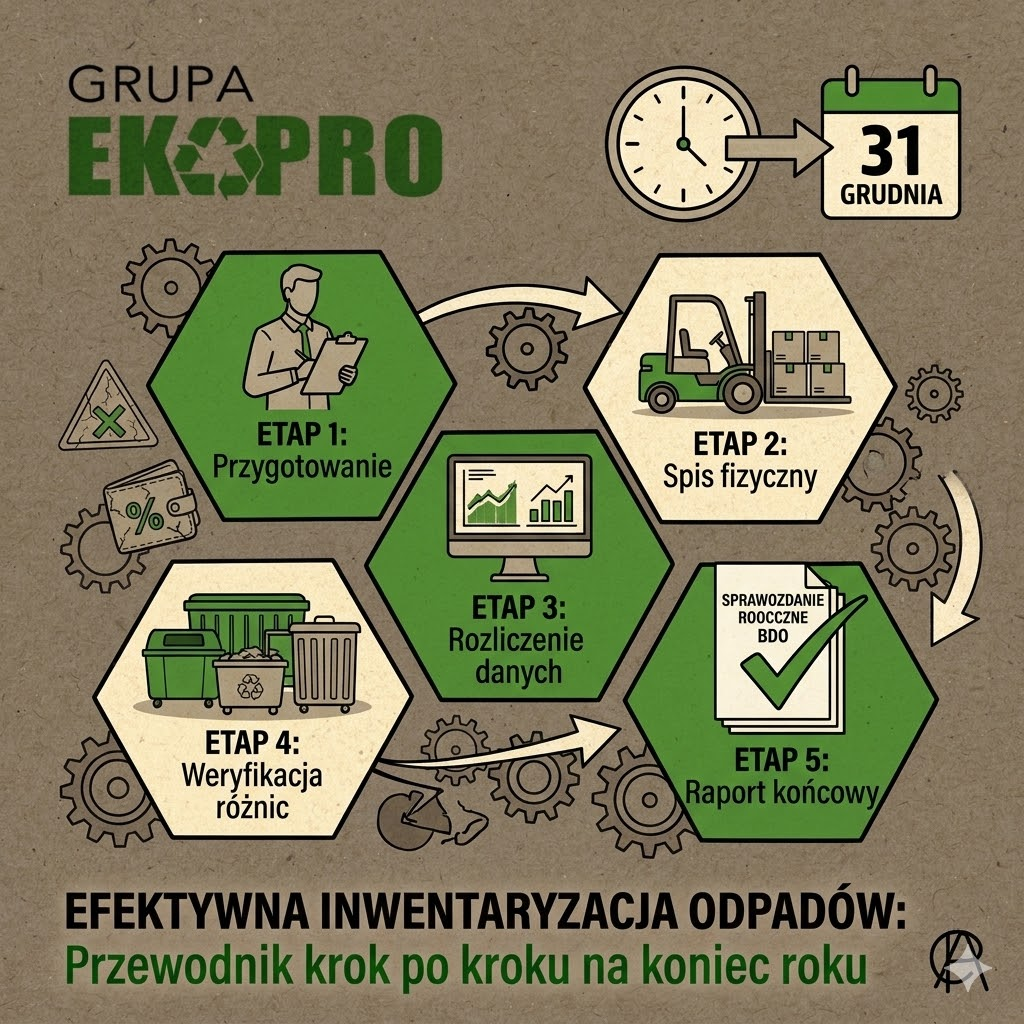
A good waste inventory before the end of the year is not about a quick „write down what's standing in the yard”, but about checking that the actual state of waste agrees with the records, transfer documents and storage organisation. This is important for a very specific reason: in the BDO system, when creating a new waste record sheet for the following year, you have to enter the stock on 1 January yourself. If a company does this on the basis of an estimate or a messy end-of-December entry, the error then carries over to the whole of the following record year. The most effective approach therefore starts not on 31 December, but earlier - by sorting out the list of waste codes, storage locations and source documents. In practice, the inventory should answer three questions: what waste is actually in the company, in what quantity, and whether its designation and records are consistent with its actual condition.
Start with the documents, not the warehouse itself
The most common mistake is to start the inventory only with a visual inspection of the storage site. Meanwhile, an effective procedure should start with a compilation of documents: waste record sheets, waste transfer sheets, internal statements of masses and a list of codes that actually operate in the company. Only against this background is it worth checking the physical condition. This order makes it possible to catch discrepancies right away: waste shown in the records that is no longer there, or conversely, waste lying in storage that has not been correctly recorded. Official control materials and BDO instructions show that the stock should correspond to reality, and that the data entered in the stock record cards are then the reference for the whole year. Therefore, practically the best method is to prepare before the inventory a working table with the waste code, storage location, last transfers and expected stock on the day of the inventory.
Check signage and breakdown of storage locations
The second pillar of an effective inventory is order in the storage area itself. If the waste is shuffled, the containers are not labelled or the company cannot assign a specific code to a specific zone, the physical inventory quickly turns into guesswork. The waste storage regulations require labelling with at least an indication of the codes of the waste stored, and for hazardous waste zones provide for additional labelling. This is of direct relevance to inventory: well-described zones and containers make it possible to quickly determine what is actually in storage and reduce the risk of confusion between similar waste streams. From an operational point of view, dividing the inventory into specific locations and codes has the best effect, rather than counting everything „in bulk” at the end of the year. This not only keeps the company's inventory in order, but also simplifies the subsequent entry of the stock into a new record sheet.
Close the year with a procedure, not a one-off inventory
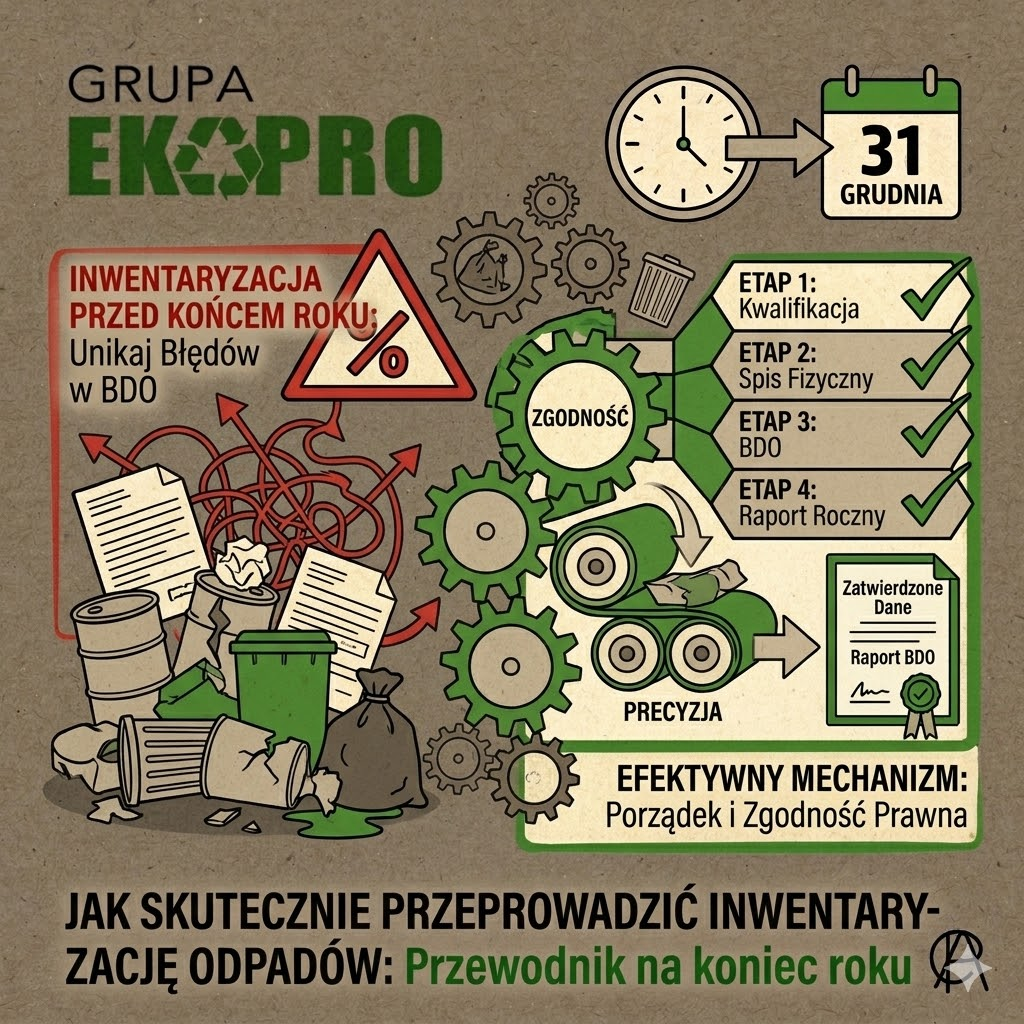
The most effective inventory is one that ends not only with a numerical result, but also with an adjustment of the process for the following year. Once the inventory is completed, it is worth immediately comparing the result with the records, determining the reasons for discrepancies, completing missing entries and preparing the data for the opening of the new year in BDO. BDO reminds that the system does not automatically create cards for the following year, and the user enters the inventory for 1 January himself after 31 December. This means that it pays for the company to end December with a ready, verified statement, rather than counting waste only in January under time pressure. In practice, it is best to implement a simple year-end procedure: Close receipts and releases at the chosen time, inventory by code and location, compare with records, explain discrepancies and prepare opening figures for the new year. It is this approach that turns the inventory from an unpleasant chore into a tool to put the company's entire waste management in order.
Why take a waste inventory before the end of the year?
To establish the stock correctly and open a new record year in BDO without errors. When creating a new card, you have to enter the stock on 1 January yourself.
When is the best time to carry out a waste inventory?
Preferably before the end of December or at the turn of the year, but with documentation prepared in advance and the scope of waste movements closed at the time of the census. This is a practical conclusion based on the need to enter the status as at 1 January.
What needs to be checked during the inventory?
Waste code, actual quantity, storage location, compliance with records and correctness of marking of zones and containers.
Does the waste storage area need to be labelled?
Yes. Labelling should include at least an indication of the codes of the waste stored, and additional requirements apply for hazardous waste
Does the BDO system itself carry stock forward to the new year?
No. BDO indicates that the user himself creates a new record card and enters the stock on 1 January himself.
If you want to sort out your waste inventories before the end of the year and make sure you open the new year in BDO with the correct data, it is worth carrying out this verification in advance. For details, see Contact page there, you can describe your situation and match the scope of support to your company's real responsibilities.

 Polski
  English (UK)
  Deutsch
  Українська