
Waste in the office and stationary shop
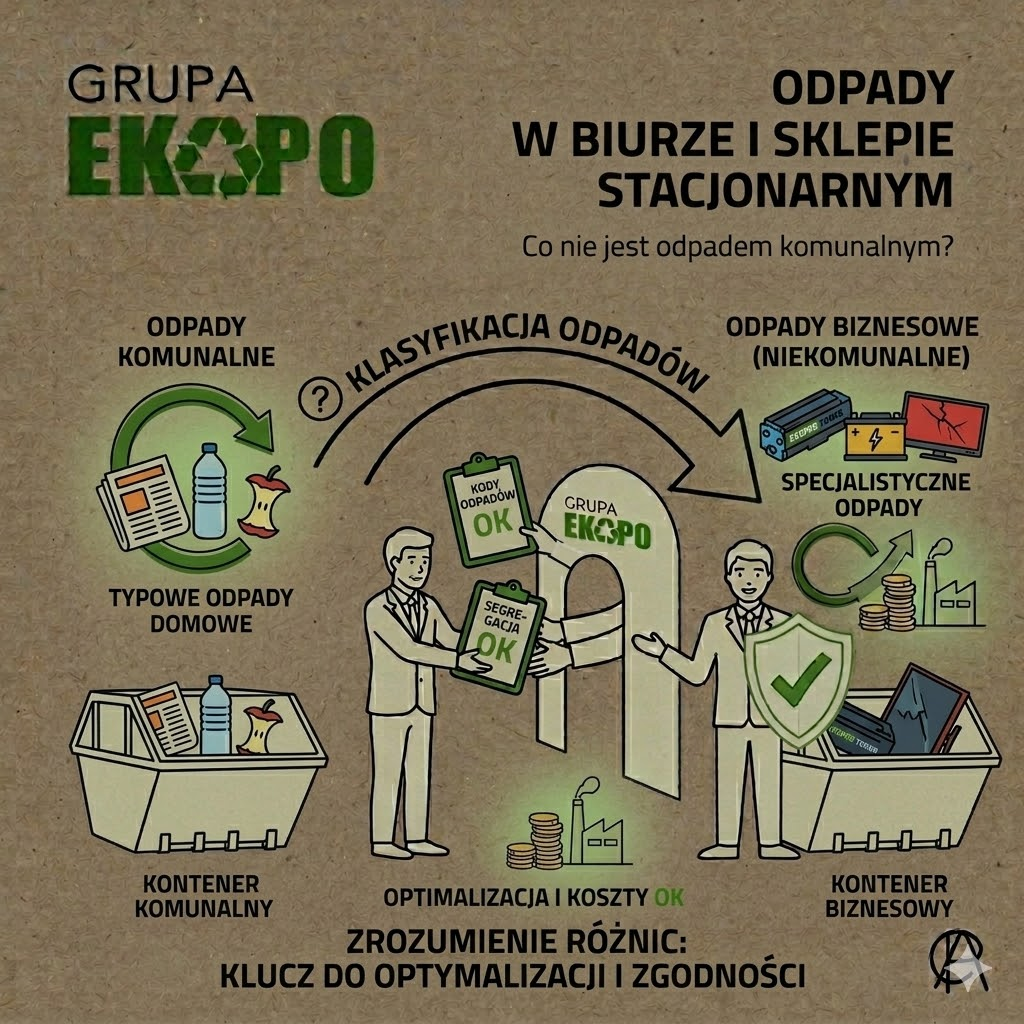
Many entrepreneurs assume that since they pay for waste collection either in rent or as part of the municipal levy, they have the subject of waste in the company closed. However, this simplification can be risky. Municipal versus company waste is not only a question of where it arises, but above all of its nature and source. In practice, waste from the employees„ social area, such as a coffee cup, a sandwich wrapper or a paper towel from the kitchenette, can be treated as municipal waste because it is similar to that generated in households and does not contain hazardous waste. The situation is different when the waste arises from the operation of a business: toner cartridges, used fluorescent lamps, broken equipment, delivery packaging, data carriers or other waste associated with the operation of an office or shop. This is where the simple thinking that ”I pay for rubbish, so I can put everything in the communal bin" comes to an end.
Which office and shop waste is not regular municipal waste?
The most questionable types of waste are those that look inconspicuous but, from a regulatory point of view, should not be placed in the standard municipal waste bin. A good example is fluorescent lamps, which in BDO materials are indicated as hazardous waste with code 16 02 13*, so their management requires a separate approach. The same is true for toner and cartridges: BDO indicates that waste from toner and cartridges for office printers is indicated with code 16 02 13* or 16 02 14, respectively, rather than the ink group codes used for production processes. This means that in an ordinary office, printer toner is not automatically „ordinary rubbish”. Waste electrical and electronic equipment, batteries or waste generated in connection with the servicing of equipment must also be added to this group of risky waste. In a stationary shop, there are also cardboard and foil from deliveries, which should not always be thrown into the same system as employees' household waste.
When is a contract with a municipality not enough and does the office have to have a BDO?
A mere agreement within the municipal system does not always solve the issue, as the regulations distinguish between municipal waste and waste generated in business activities, for which either record-keeping or organisational obligations may arise. The obligation to register with BDO applies to entrepreneurs who generate waste and keep records of it, while some entrepreneurs are excluded from this registration. At the same time, BDO indicates that waste generated in the social area for employees is treated as municipal and is not subject to record keeping, but this does not automatically mean that every waste from an office or shop has this status. Importantly, BDO also gives a practical example: if a company does not want to register itself as a generator of waste related to fluorescent lamps, it can outsource the maintenance and repair of lighting to an external company, which then becomes a generator of waste. This shows that the boundary between „ordinary rubbish” and corporate waste does not only depend on the location, but also on how the waste stream is created and the responsibility for the waste stream. Therefore, the answer to the question „does an office have to have a BDO” is most often: not always, but very often this needs to be verified on a case-by-case basis, especially when hazardous or non-hazardous waste arises.
How to safely separate household waste from business waste?
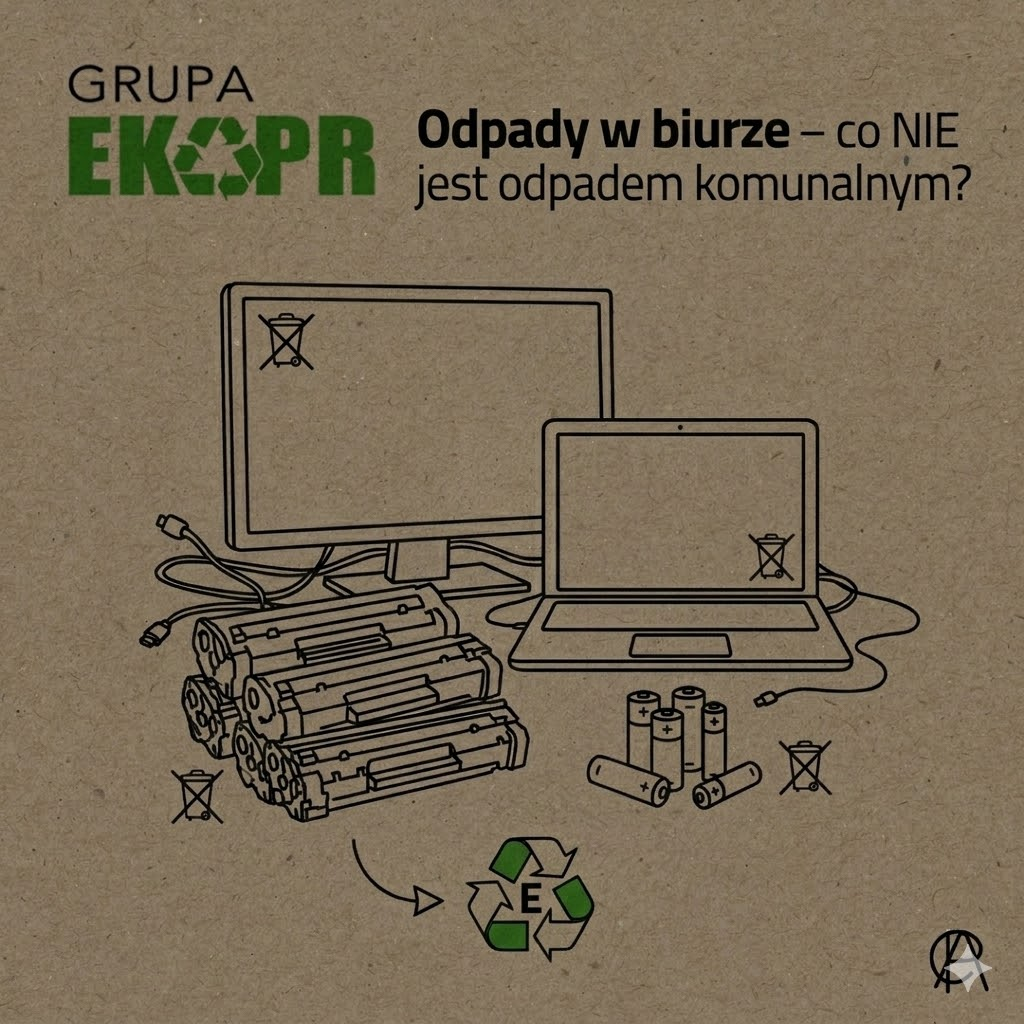
The most practical approach is to separate employee waste from company operational waste. A coffee mug, a water bottle or a lunch pack from the back office would normally fit into the logic of municipal waste. Used toner, fluorescent tubes, an old monitor, batteries from appliances, storage media or some of the packaging waste from deliveries should be assessed separately. In small companies, it is this second basket that is most often overlooked, because the entrepreneur sees a small scale and assumes that there are no obligations. Meanwhile, even small amounts of some wastes may need to be properly classified and handed over to an authorised entity, and sometimes also registered or recorded in BDO.
Can a company dispose of rubbish in communal bins?
Yes, but only in relation to waste of a municipal nature, similar to household waste, for example from the social area. Not every waste generated in a company has this status.
What waste does the office generate?
Most often, this includes employees' personal waste as well as waste from operations: toners, fluorescent tubes, used electrical equipment, batteries, cardboard and foil from deliveries or data carriers
Does the office need to have a BDO?
Not always, but the obligation must be assessed on a case-by-case basis. The mere fact of running an office does not prejudge the entry, but the appearance of certain corporate waste can already trigger obligations in BDO.
What is the waste code for printer toner?
BDO's materials indicate that waste from office printer toners and cartridges is coded 16 02 13* or 16 02 14 respectively, depending on the characteristics of the waste.
How to dispose of fluorescent lamps in the office?
They should not be thrown into regular municipal waste. BDO identifies fluorescent lamps as hazardous waste, which should be managed in the correct collection route.
If you want to check which wastes in your office or shop can be treated as municipal and which already require a separate approach, it is worth sorting this out before errors appear in the collection, records or BDO. In practice, the most convenient way to do this is through a professional BDO outsourcing, which puts your responsibilities in order without involving your team in regulatory analysis. For details, see Contact on the site where you can describe your situation and match the scope of support to your company's real needs.

 Polski
  English (UK)
  Deutsch
  Українська