Eco-marketing without greenwashing
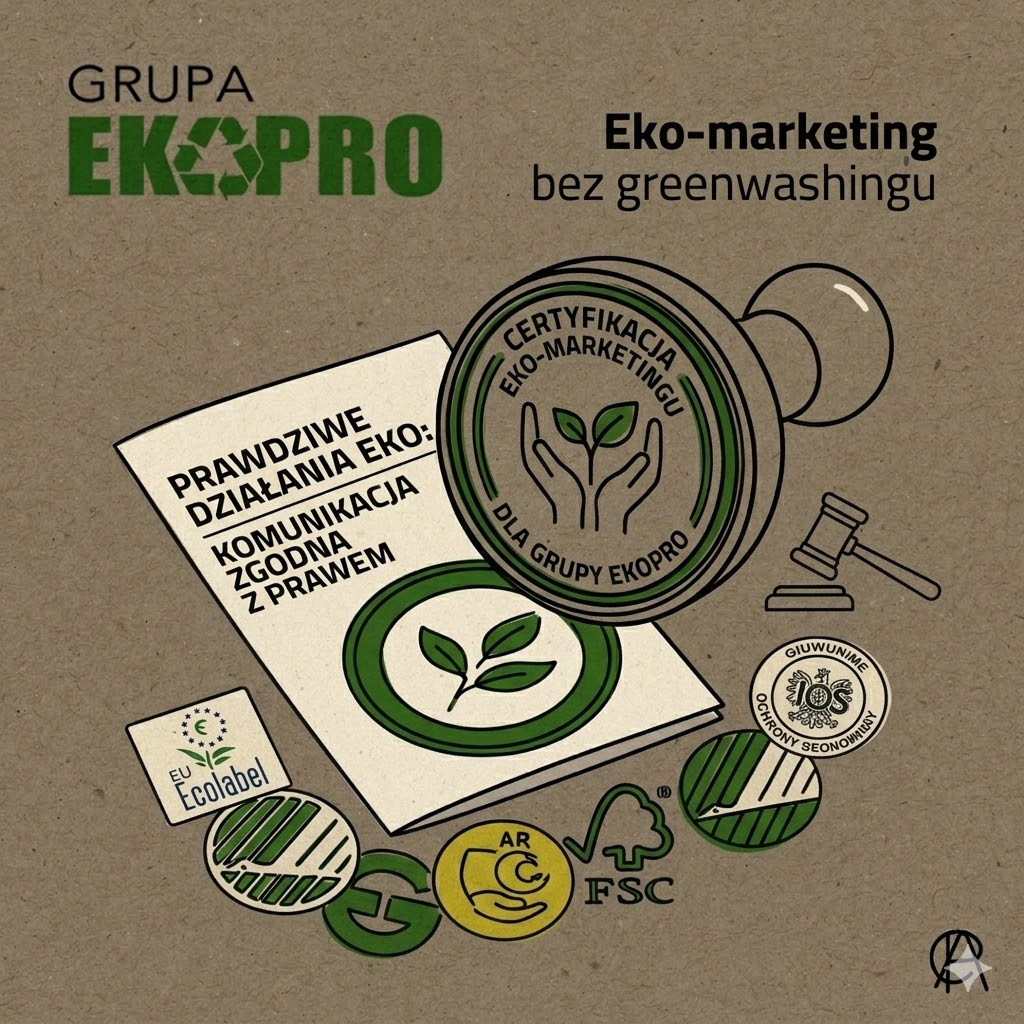
Today, the biggest mistake in eco-marketing is not a lack of pro-environmental measures, but communicating too broad, too general or too glamorous what the company actually does. Until a few years ago, many brands simply referred to themselves as „eco-friendly”, „green”, „responsible” or „environmentally neutral”. In 2026, this is already a very risky strategy. The OCCP is openly pursuing greenwashing cases, and new EU rules aim to restrict generic environmental claims if they are not clearly justified and understandable to the consumer. In practice, this means that eco-marketing is still possible and necessary, but it must be based on specifics: what exactly the company has done, what the claim is about, its scope and whether it can be objectively confirmed. This is what distinguishes legitimate pro-environmental communication from greenwashing.
Be specific and not general
The safest rule is: the more generic the slogan, the greater the legal risk. Messages such as „eco”, „environmentally friendly”, „sustainable” or „better for the planet” are particularly dangerous when it is not clear what exactly they refer to. The OCCP, in its latest communications, points out precisely this problem: the consumer should understand, what is ecological, on what scale, under what conditions i on the basis of which data. A similar direction stems from EU law: directive 2024/825 strengthens consumer protection against general environmental claims that cannot be demonstrated. In practice, this means that instead of writing „our service is green”, it is better to write, for example: „in 2025 we have reduced our on-site electricity consumption by 18% against 2023” or „this packaging contains 70% of recyclate”. Such a message is narrower, but much safer and more credible.
Prove, document and don't transfer parts to the whole
The second pillar of safe eco-marketing is evidence. The European Commission has been pointing out for years that environmental claims should be based on substantiation, and the Green Claims Directive proposal goes even further by requiring such communications to be based on recognised scientific evidence, an appropriate scope of assessment and a clear indication of whether the claim applies to the whole product, just a part of the product, one stage of the life cycle or just a fragment of the company's activity. This is very important in marketing practice, because this is where many cases of greenwashing arise: a company shows one green element and extends it communicatively to the whole brand. If, for example, only one product line has recycled packaging, it must not be implied that the company's entire offering is „green”. If the „green fleet” includes only part of the vehicles, the message must not be constructed as if it applies to the entire service. The more accurately the company separates the scope of the message, the less risk of a charge of misleading.
Avoid blank certificates and unclear markings
The third area of risk is environmental labels, signs and self-labelling. EU changes are clearly moving in the direction of restricting unreliable voluntary sustainability labels, especially those that do not result from a recognised certification scheme or are not established by a public authority. This means that companies should be very careful with their own icons, leaf-badges, „eco choice” pseudo-labels or graphics that suggest official confirmation of environmental attributes. In practice, the best strategy is simple: instead of creating a marketing symbol, it is better to give a short and verifiable explanation of what the environmental advantage is about. In 2026, safe eco-marketing is not „more green slogans”, but more precision, context and evidence. A company that communicates less impressively but accurately tends to build more trust and at the same time reduces the risk of a dispute with consumers or the authorities.
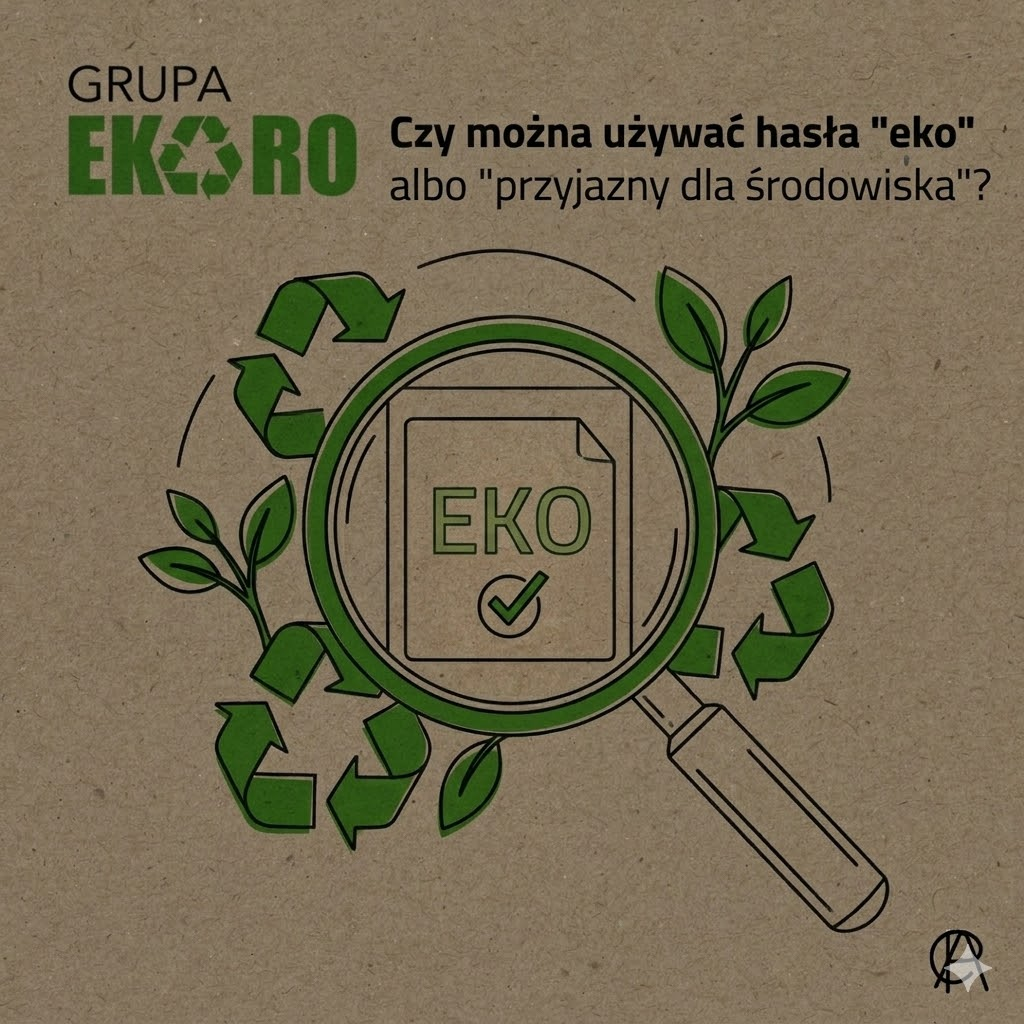
Can the slogan „eco” or „environmentally friendly” be used?
Yes, but only if the company can clearly and reliably demonstrate exactly what such a message is about. Generic slogans without justification are particularly risky today.
What is greenwashing?
It is marketing communication that suggests environmental benefits that are greater, broader or more certain than the actual actions of the company or product. Such practices are targeted by the OCC.
Can a company be said to be „climate neutral”?
This is a very risky formulation if it is not precisely explained and based on full justification. Messages based on incomplete data or on only part of the activity are particularly problematic.
Is it safe to have your own „eco” label on your website or packaging?
Not always. EU rules aim to curb unreliable voluntary environmental labels that are not based on a recognised certification scheme or are not established by public authorities.
Jwhat is the safest way to communicate environmental measures?
It is best to use messages that are specific, measurable and narrow: indicate scope, date, reference point and evidence, rather than building broad image slogans. This approach stems from both OCC practice and the direction of EU changes.
If you want to check that the environmental communications used by your company are legally safe and do not expose your brand to accusations of greenwashing, it is a good idea to verify them before they are published, and not only after the reaction of customers or the authority. For details, see Contact on the website, you can describe your communication and match the scope of support to the real needs of your company

 Polski
  English (UK)
  Deutsch
  Українська