Packaging recovery organisation
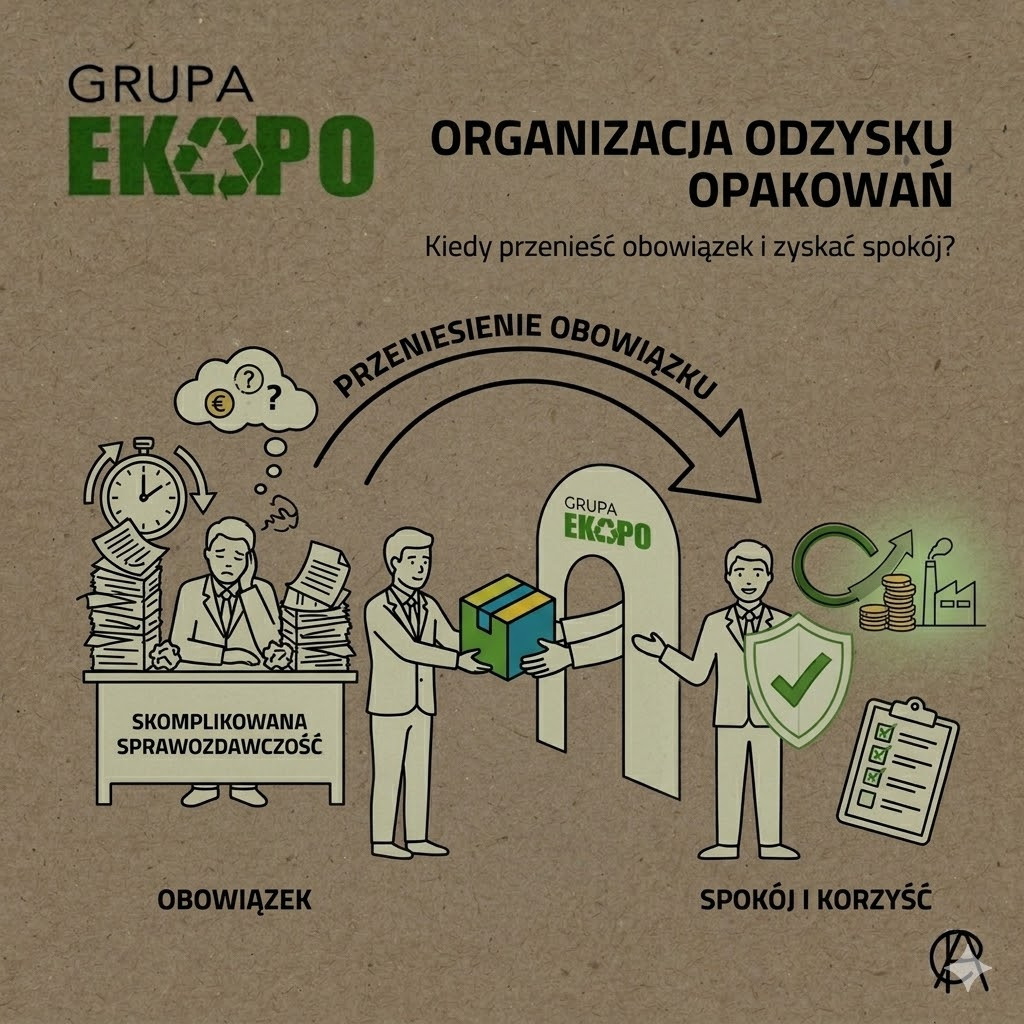
If a company introduces packaged products, sooner or later it has to answer one practical question: whether it is more profitable to settle the recycling obligation and possible product fee on its own or to sign a contract with a packaging recovery organisation. In many cases, the second option turns out to be financially and organisationally more advantageous, especially when the entrepreneur wants to reduce the risk of errors, simplify settlements and better plan costs. From the company's point of view, it is not just a matter of a formal „transfer of papers”, but of the assumption of the recovery obligation by a specialised entity that operates under the system envisaged for the introducers of packaged products. When the obligation is not fulfilled, the entrepreneur or recovery organisation must pay a product fee to the relevant marshal's office, so the decision on the settlement model has a direct impact on the company's financial result. In addition, an annual report must be submitted to the BDO by 15 March, and the self-settled product fee is, as a rule, linked to a payment deadline of 31 March, so the timing of the choice of solution is of practical importance.
How does a packaging recovery organisation work and what does it realistically take over?
The mechanism is simple: an entrepreneur introducing packaged products enters into a contract with a recovery organisation, which takes over the obligation to achieve the required
recycling levels for specific types of packaging. In practice, the company pays a set fee, often seen by customers as a predictable subscription, and in return reduces the risk of failing to meet the obligations and the associated product fee on its own. This solution is particularly convenient for companies that introduce packaging in a variety of materials, have a dispersed sales structure or do not want to build their own facilities for analysing packaging weights, recycling levels and environmental settlements. In this area, it is important to remember that the obligations do not end with recovery only: the entrepreneur still has to keep an eye on correct data, reporting and other system requirements, and activities such as BDO educational campaigns or correct inclusion of data in the product and packaging report also remain in the background. Therefore, a good contract with a recovery organisation should not only be chosen according to the slogan „packaging recovery organisation price list”, but also in terms of the scope of the responsibilities taken on and the quality of the advisory support.
When does signing a contract really pay off?
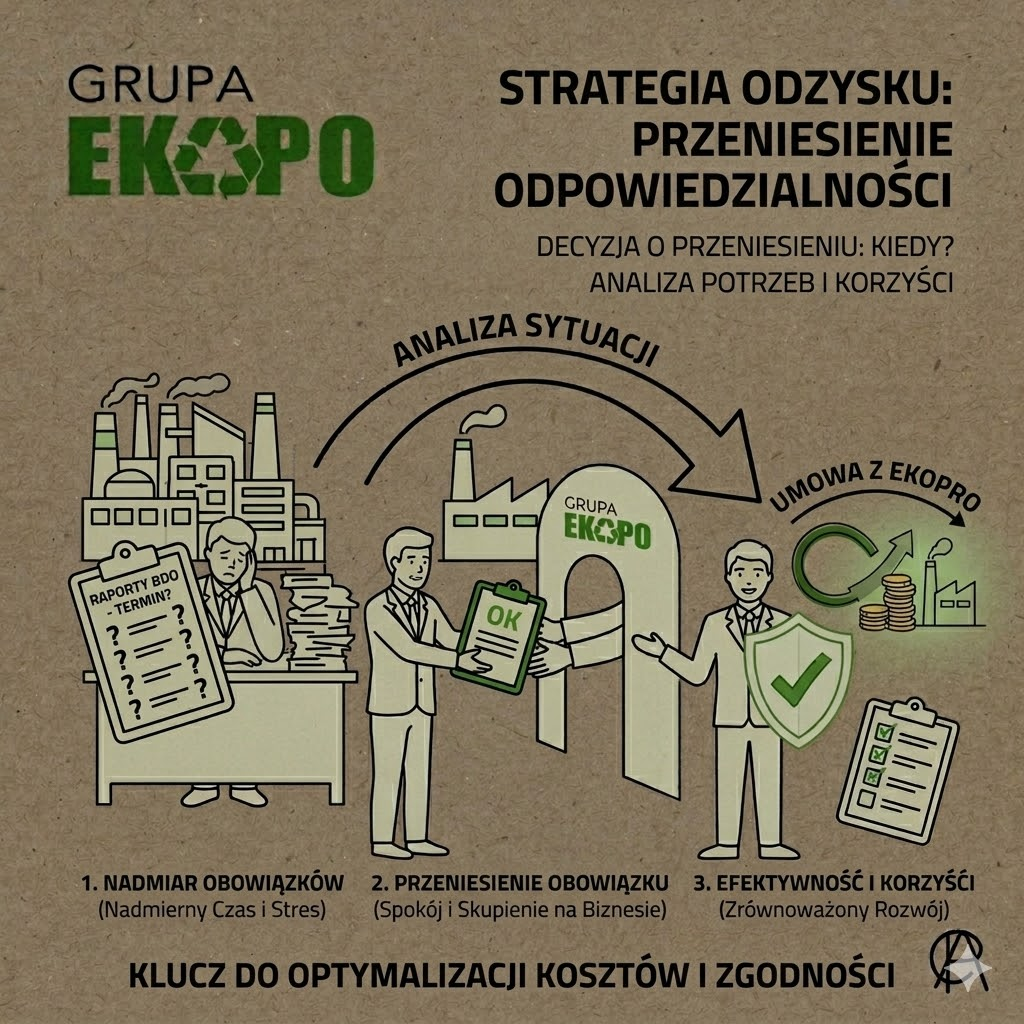
It makes most economic sense to sign an agreement when settling the product fee on your own would be more expensive or risky than the cost of working with a recovery organisation. In practice, this applies above all to companies introducing a greater mass of plastic, aluminium, paper, glass or steel packaging, as the rates of the product fee are differentiated by material and can significantly affect the final settlement. Examples of available rate statements show that for individual materials the differences are clear, with plastic packaging usually being among the more costly categories. This is why the product fee versus recovery organisation is not only a formal topic, but above all a business calculation: if the cost of the contract is lower than the likely product fee and the internal cost of handling the obligation, the entrepreneur saves in real terms. The greater the mass of packaging and the more complex the material structure, the more often outsourcing the obligation becomes profitable. An additional benefit is budget predictability, because instead of incurring an uncertain cost due to recycling levels and possible billing errors, the company can plan the expense in advance.
What term for the contract and how to approach the cost-effectiveness calculation?
The wisest thing to do is to sign the contract with the recovery organisation before the end of the accounting year or, at the latest, at the stage of organising the data for the annual report, so that the way in which the obligation is fulfilled is consistent with the documentation being prepared. Delaying usually ends in chaos: the company has to simultaneously determine the packaging weights, verify the data for the BDO, analyse the additional obligations and calculate whether it is more profitable to pay the product fee on its own. A good calculation should take into account four elements: the weight of packaging by material, the potential amount of the product fee when self-billing, the cost of cooperation with a recovery organisation and the cost of time and risk on the part of the company. This is where a product fee consultancy works best, as it not only allows you to compare the options, but also to select a model that is beneficial for the long term and not just „for this year”.
Do I need to have a contract with a recovery organisation?
Not always. The entrepreneur may fulfil the obligation on his own, but if he does not achieve the required recycling levels, he must pay a product fee. An agreement with a recovery organisation is therefore a way to take over the recovery obligation and simplify settlements.
How much can you save with a recovery organisation?
This depends on the weight of the packaging, its material, the rates of the product fee and the offer of the specific organisation. The greatest savings usually occur where a company introduces larger volumes of packaging and would have to bear the high costs of self-billing.
When to sign a contract with a recovery organisation?
Preferably before the end of the accounting year or before the preparation of the annual report in BDO, in order to have a consistent settlement model and avoid later adjustments.
Does a recovery organisation discharge its obligations in BDO?
Not completely. Taking over the recovery obligation does not automatically remove all registration and reporting obligations from the trader, so data and records still need to be kept correctly.
What to consider besides price?
It is not only the price list, but also the extent to which responsibilities are taken over, the billing support, the timeliness of action and the quality of advice. The cheapest offer does not always mean the lowest total cost for the company.
If you want to check whether it is more cost-effective for your company to pay the product fee on its own or to cooperate with a recovery organisation, it is worth first calculating this on specific data. A well-prepared analysis allows you to reduce costs, sort out your obligations and avoid a wrong decision. Details can be found in the Contact page there, you can describe your situation and choose a solution that is financially beneficial and formally secure at the same time.

 Polski
  English (UK)
  Deutsch
  Українська