
Waste codes in practice how to correctly classify waste in a company?
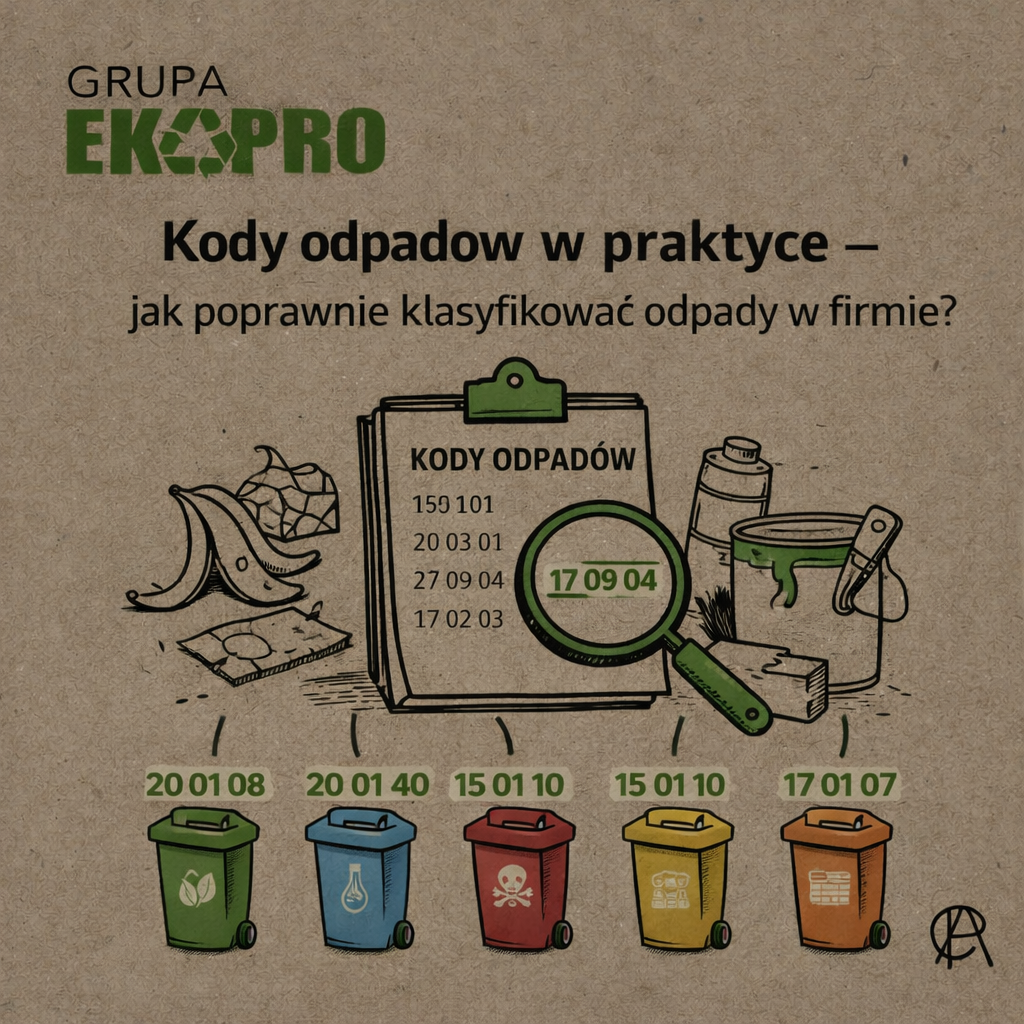
The correct classification of waste is one of the basic obligations of business operators. Any waste arising in a company must be assigned to the appropriate code in accordance with the waste catalogue and included in the records kept in the BDO system. In practice, this means identifying the source of the waste, its properties and assigning the correct six-digit code. Mislabelling of waste can lead to problems during transport, refusal of the waste by the treatment facility, and administrative penalties in the event of an inspection by environmental authorities.
Many businesses use tools such as a waste code finder, but simply searching for the name of the waste is not always enough to classify it correctly. It is crucial to understand how the waste catalogue works and to correctly identify the process by which the waste was created. This avoids the most common mistakes, such as confusing municipal waste with business waste.
Waste catalogue how does the code system work?
The waste catalogue is an official list of waste types used throughout the European Union. It assigns each waste to a specific code consisting of six digits. The structure of the code is arranged in a hierarchical manner the first two digits indicate the waste group, the next two indicate the subgroup and the last two indicate the specific type of waste.
For example, the code 15 01 02 stands for plastic packaging. In this case, group 15 covers packaging waste, while further digits specify the exact material from which the packaging is made.
In practice, entrepreneurs should keep in mind one key principle: waste is classified primarily according to the process by which it was created, not by its common name. This means that the same material may have different waste codes depending on where and how it was generated.
For example, plastic film created during the packaging of goods in the warehouse will have a different code than film created during the production process.
Therefore, the correct classification of waste requires an analysis of the company's processes and an accurate determination of the source of the waste.
Waste classification in a company the most common mistakes entrepreneurs make
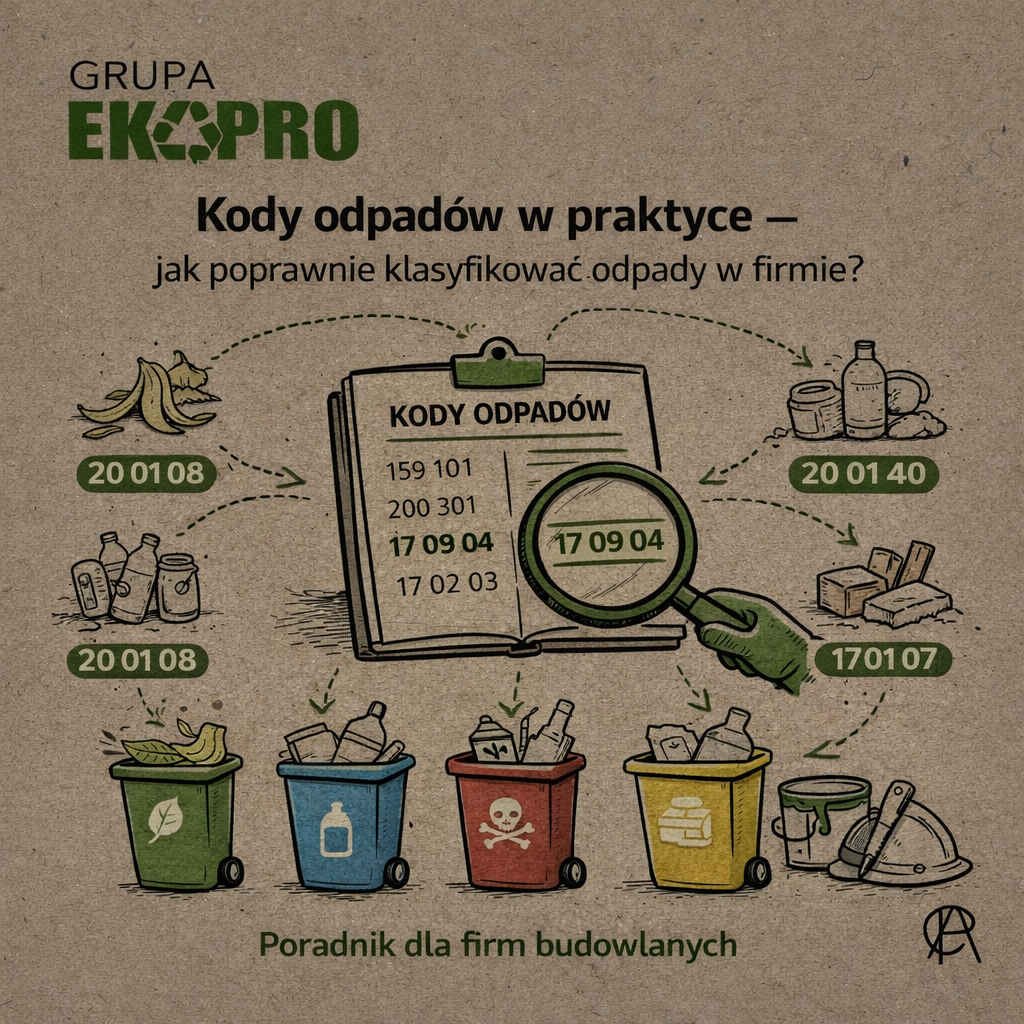
In practice, many companies make mistakes when classifying waste, which can lead to irregularities in the records kept in BDO. One of the most common problems is treating waste generated in business activities as municipal waste.
Municipal waste is waste that arises from households, so in most cases businesses should not classify business waste in this way. Even if the waste resembles typical household waste, if it has arisen in connection with a business, it must be classified according to the waste catalogue.
Another common mistake is to select a waste code based only on its name. For example, plastic packaging is often classified under the code 15 01 02, but in some cases there may be other, more precise codes.
It is also worth noting the classification of hazardous waste. In the waste catalogue, they are marked with an asterisk (*), which indicates their potential hazardous properties for the environment or human health. Particular care is required with such waste, as misclassification can lead to serious legal consequences.
In order to avoid waste classification problems, entrepreneurs often benefit from professional support from waste management specialists. As part of a comprehensive environmental consultancy, it is possible to correctly assign waste codes and put the company's records in order:
Comprehensive environmental consultancy for companies
Waste transfer note and change of waste code in records
The correct waste code is of direct relevance to the documentation maintained in the BDO system. Each waste transfer card must contain the correct waste code and the exact weight of the waste. For example, a waste transfer card with a code 15 01 02 concerns plastic packaging sent for further management.
If the waste code is entered incorrectly, the receiving facility may refuse to accept the waste. This may also result in the need to correct documentation and explanations in the event of an inspection by environmental authorities.
In some situations, it is possible to change the waste code if it turns out that the original classification was incorrect. However, such a change should result from an analysis of the actual waste generation process and must be properly documented in the records.
Entrepreneurs should also remember that waste records are part of the company's wider waste management system. For more information on proper waste management, see the article:
Waste management in the company
FAQs
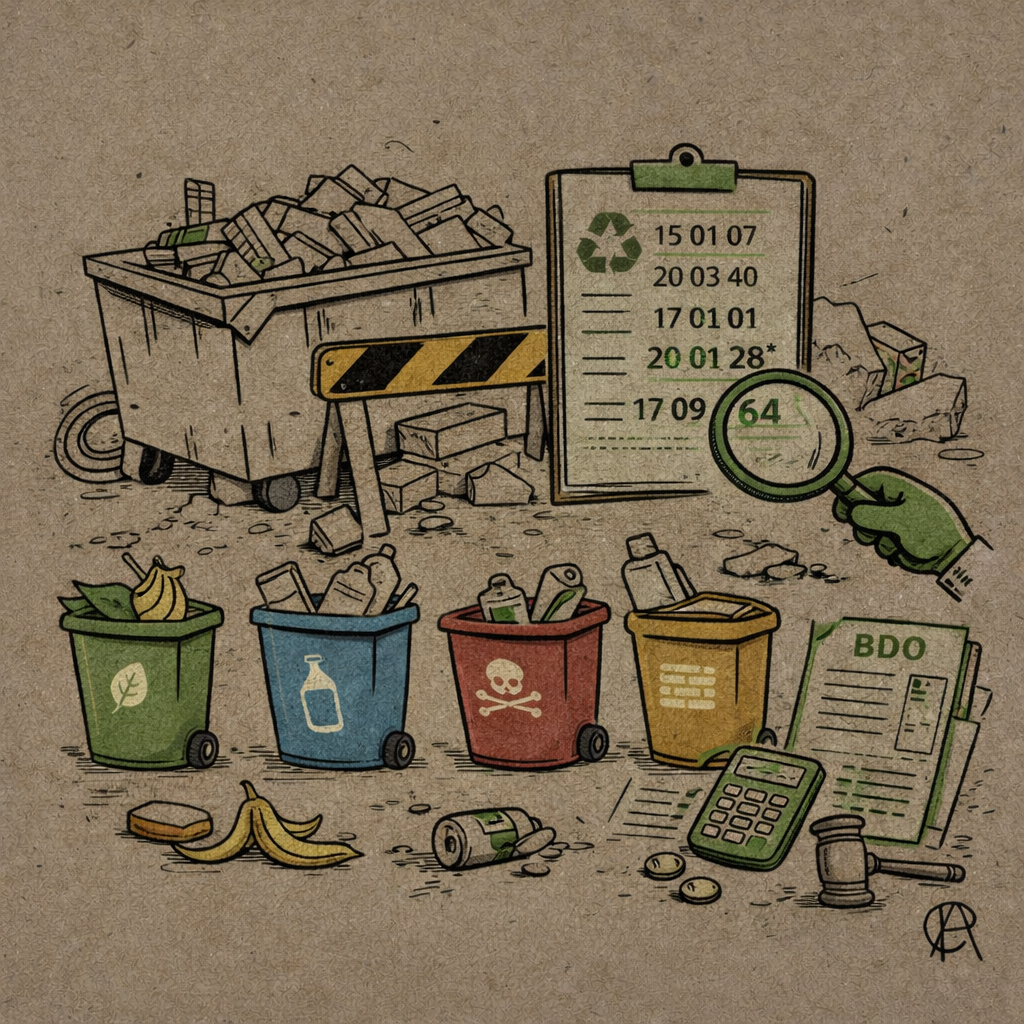
How do I check the waste code?
The waste code can be determined from the waste catalogue by looking at the process that produced the waste. First find the relevant waste group, then the subgroup and finally the most precise code corresponding to the waste type.
Can an online waste code finder be used?
Yes, waste code search engines can be a helpful tool, but they do not always guarantee correct classification. The ultimate responsibility for the correct assignment of the waste code lies with the operator.
What is the penalty for an incorrect waste code in BDO?
An incorrect waste code can result in administrative fines, the need to correct records and problems during inspections by environmental authorities.
Does every waste in a company have to have a code?
Yes. Any waste arising from business activities should be classified according to the waste catalogue and included in the records kept in the BDO system.
Can office waste be treated as municipal waste?
In most cases, no. If it is generated as a result of a business activity, it should be classified as company waste and included in the waste records.
Can the waste code be changed after the documents have been issued?
Yes, but only if it turns out that the original classification was wrong. The change must be properly documented and should result from an analysis of the waste generation process.
Why is the correct classification of waste so important?
The correct assignment of the waste code affects how the waste is stored, transported and further processed. Incorrect classification can lead to legal problems and hinder proper record-keeping in the BDO system.

 Polski
  English (UK)
  Deutsch
  Українська