Multi-material Packaging: Properties and Management
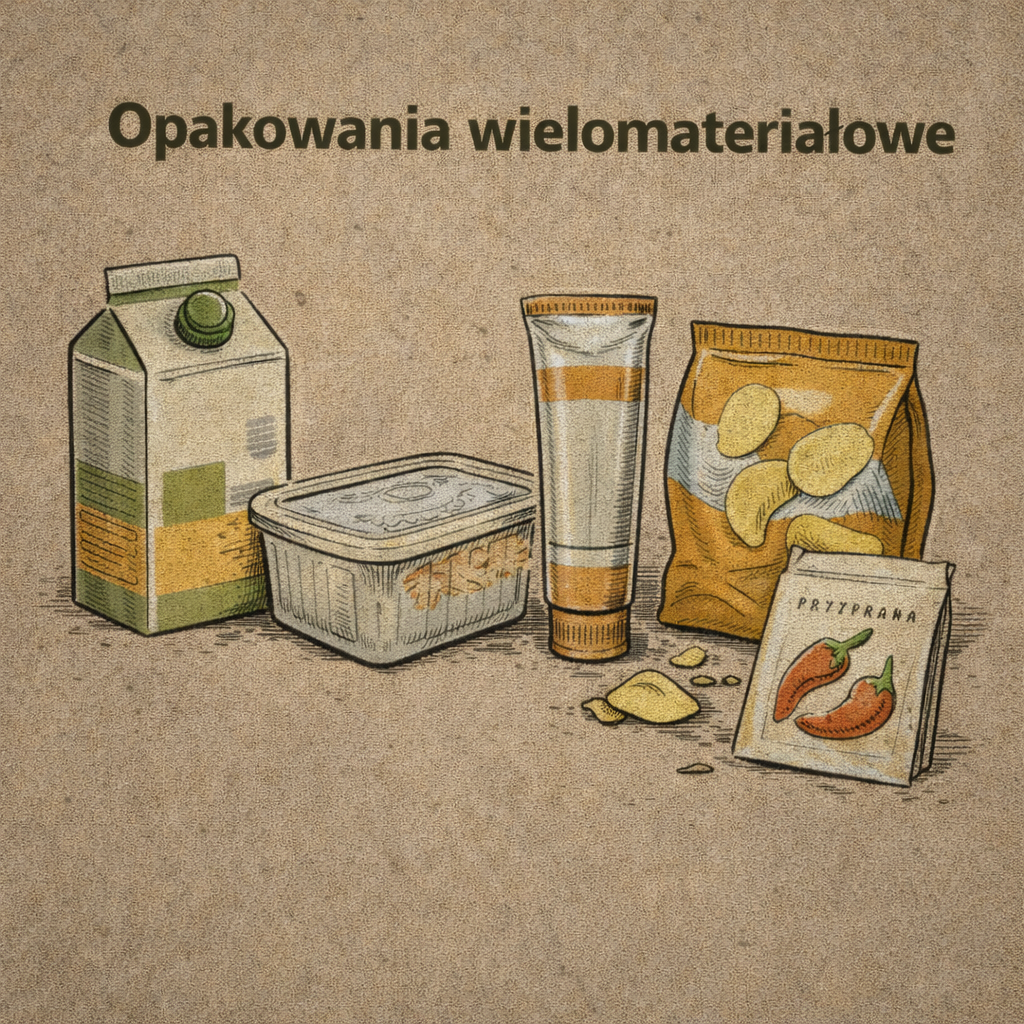
Multi-material packaging, also known as composite packaging, is innovative solutions, which join two or more different materials in such a way that they cannot be easily separated by hand or by simple mechanical methods. In Poland, they account for as much as 60% all packs, highlighting their significant role in everyday life and the economy.
One of the main challenges associated with these packages is their recycling. The process is more technologically complex than single raw material packaging. It requires specialised equipment and a significant amount of energy, making it expensive and difficult to implement on a large scale. However, the recycling of this packaging is crucial for environmental protection, as it contributes to the reducing waste and saving raw materials.
In 2022, the definition of multi-material packaging has been updated to better take into account the integrity of the layers of materials. These changes aim to improve the management of this packaging and increase recycling. In Poland, the current uniform waste separation system, which also includes multi-material packaging, making it easier to collect and process.
The food industry is one of the main users of multi-material packaging due to its excellent protective properties. They protect products from moisture, light and other external factors, which prolongs their shelf life and preserves their quality. In order to meet increasing environmental demands, new regulations have been introduced regarding minimum recovery and recycling levels. For example, in 2024, the minimum recycling level for multi-material packaging is to be 59%, and is expected to increase to 70%.
In the context of a closed-loop economy, multi-material packaging plays an important role by promoting recycling and reuse of materials, which is crucial for environmental protection. In Poland, the Packaging and Packaging Waste Management Act regulates the management of this packaging, and packaging recovery organisations support entrepreneurs in recycling. In the future, will it be possible to achieve full compliance with the principles of a closed-loop economy while minimising environmental impact?
What is Multi-Material Packaging?
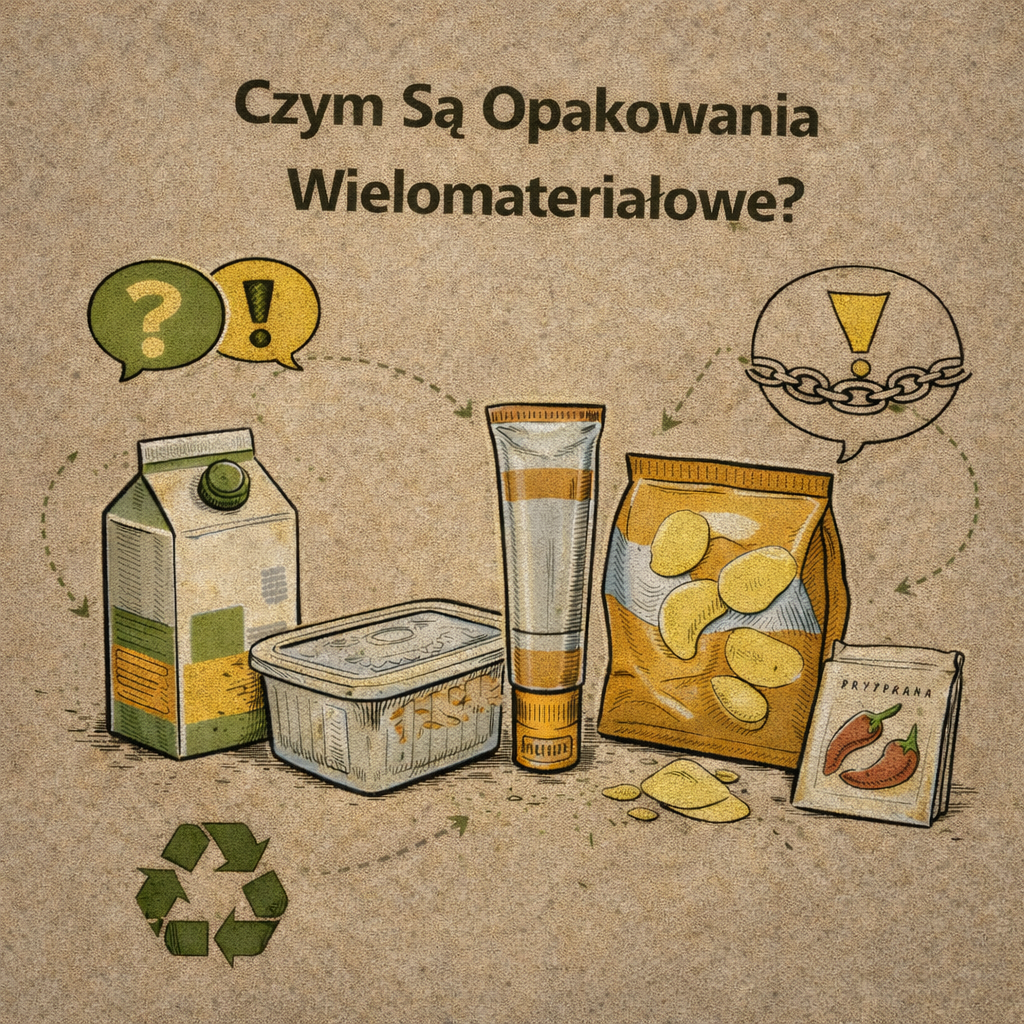
Multi-material packaging is innovative solutions, which combine two or more different materials to form a structure that is difficult to separate by hand or by simple mechanical methods. They are widely used in the food, cosmetics and many other industries, thanks to their exceptional protective properties. In Poland, liquid food cartons account for as much as 60% of all multi-material packaging, highlighting their importance in our daily lives and economy.
One of the main challenges associated with these packages is their recycling. Due to their complex structure, this process is technologically more complicated than packaging made from a single raw material. It requires specialised equipment and a considerable amount of energy, making it expensive and difficult to implement on a large scale. Nevertheless, recycling of this packaging is crucial for environmental protection, as it helps to reduce waste and save raw materials.
Definition and characteristics
Multi-material packaging is distinguished by flexibility, durability and the ability to extend the shelf life of products. Through the use of different layers, they effectively protect the contents from light, oxygen and temperature fluctuations, which is particularly important in the food industry. Liquid food cartons are the most characteristic example of multi-material packaging, which ensures the safety of products against fungi and bacteria.
In 2022, the definition of multi-material packaging has been updated to better take into account the integrity of the layers of materials. These changes aim to improve the management of these packages and increase their recycling. In the case of multi-material packaging, the percentage of individual fractions is not relevant, allowing for more flexibility in the design and production of these packages.
Examples of multi-material packaging
Multi-material packaging includes:
- Milk and juice cartons
- Spice bags
- Crisp packets
- Laminate tubes in the cosmetics industry
These packages are not only functional but also aesthetically pleasing, making them attractive to consumers. Their ability to combine different materials makes it possible to create packaging with unique properties that can be tailored to specific product needs. In the future, will it be possible to develop even more advanced technologies that allow these packaging to be more easily recycled?
Types of multi-material packaging
In the world of packaging, diversity and functionality are key. Types of multi-material packaging play an important role in this, offering solutions that are indispensable in many industries. They are created from a variety of materials such as plastics, aluminium, steel, glass, wood and paper and cardboard. Each of these materials brings unique properties that are used depending on the needs of the product and its intended use.
The division of these packages is often based on the predominant material, which allows a better understanding of their properties and applications. For example, packaging with a predominance of plastic may offer greater flexibility and resistance to moisture. In contrast, those with a predominance of aluminium provide an excellent barrier to light and oxygen. This division is not only practical, but also supports the recycling process, enabling more efficient waste management.
Liquid Food Carton
Carton for liquid food is one of the most commonly used multi-material packaging, especially in Poland, where it accounts for as much as 60% of all such packaging. This is an excellent example of how different materials can work together to create packaging that is both functional and effective. These cartons are commonly used to store milk and juices, giving them a long shelf life and protection from the elements.
Their popularity is due to the excellent protective properties they provide thanks to their multi-layered structure. Each layer performs a specific function, from moisture protection to a barrier to light, which is crucial for preserving the freshness and quality of liquid foods. Will liquid food cartons become even more advanced in the future, offering new functions and better environmental friendliness?
Laminate tubes and other examples
Laminate tubes is another fascinating example of packaging multi-material tubes, which are widely used in the cosmetics industry. Thanks to their construction, these tubes effectively protect the contents from external factors such as light and air, which is extremely important for preserving the quality of cosmetics. Their multilayer structure not only provides protection, but also an aesthetic appearance, which is important in an industry where the appearance of the product is of great importance.
In addition to laminate tubes, there are many other examples of multi-material packaging that are used in various sectors. These can include, for example, spice packs that combine paper with aluminium foil, or chip packs that use a combination of plastic and metal. Each of these packs is designed with the specific requirements of the product in mind, demonstrating how versatile and adaptable multi-material packaging can be. What new innovations in the field of multi-material packaging will the future bring in order to even better meet the needs of consumers and the environment?
Multi-material packaging recycling
Recycling of multi-material packaging is a key element in waste management and environmental protection. The process is more complicated than recycling homogeneous packaging, as it requires specialised machinery and a significant amount of energy. Despite these challenges, recycling such packaging reduces waste and saves raw materials, which is essential for sustainability.
The recycling process involves converting used packaging into new products, which requires advanced technology and precise management. In Poland, this is particularly important as this packaging accounts for a significant proportion of all packaging used in the country. In the future, will it be possible to develop more efficient recycling methods that will reduce costs and increase the efficiency of the process?
Recycling Processes: Mechanical, Chemical and Thermal
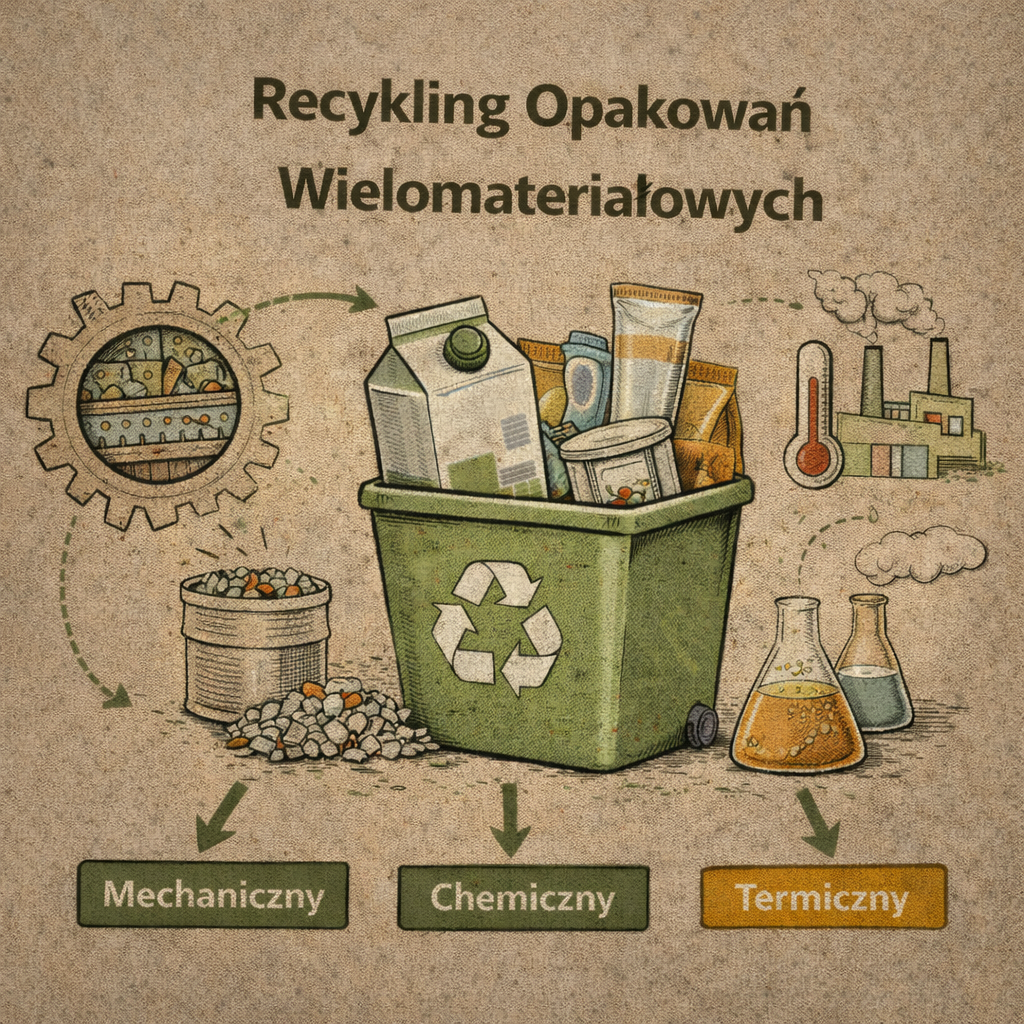
Recycling of multi-material packaging can be divided into three main methods: mechanical, chemical and thermal. Each has its own unique features and applications that support effective waste management.
- Mechanical recycling: Consists of sorting, shredding, washing and extruding plastics. It is the most traditional form of recycling, allowing materials to be reused in the manufacture of new products. Although the process is energy intensive, it has the advantage of being able to process materials directly without chemical modification.
- Chemical recycling: Uses solvents or high temperatures to process plastics. This method allows materials to be broken down into their basic chemical components, which can be used to produce new materials. It is a more advanced technology, capable of processing materials that are not mechanically recyclable.
- Thermal recycling: This involves burning plastics to produce electricity and heat. Although this method does not lead to the recovery of materials in the traditional sense, it allows waste to be used effectively as an energy source. It is particularly useful for materials that cannot be recycled by other methods.
Each of these methods has its place in the waste management system, and their effective use can make a significant contribution to sustainability. What innovations in recycling could emerge in the future to make these processes even more efficient?
The use of PolyAl and other materials
The use of recycled materials, such as PolyAl, is key to sustainable waste management. PolyAl, created by recovering aluminium and polyethylene from multi-material packaging, is used in the manufacture of plastic products. Its unique properties make it a valuable raw material for material recovery.
PolyAl is not only useful in the manufacture of new products, but is also suitable for energy use. However, methods are still being sought to effectively separate aluminium and polyethylene, which would allow even more efficient use of these materials. As recycling technologies develop, the possibilities for using PolyAl and other recycled materials will increase.
Recovering materials from multi-material packaging is not only good for the environment, but also economically viable. As the demand for sustainable solutions grows, innovations in recycling can bring new opportunities for the industry. What new technologies might emerge in the future to further improve the efficiency of material recovery?
Multi-material waste management
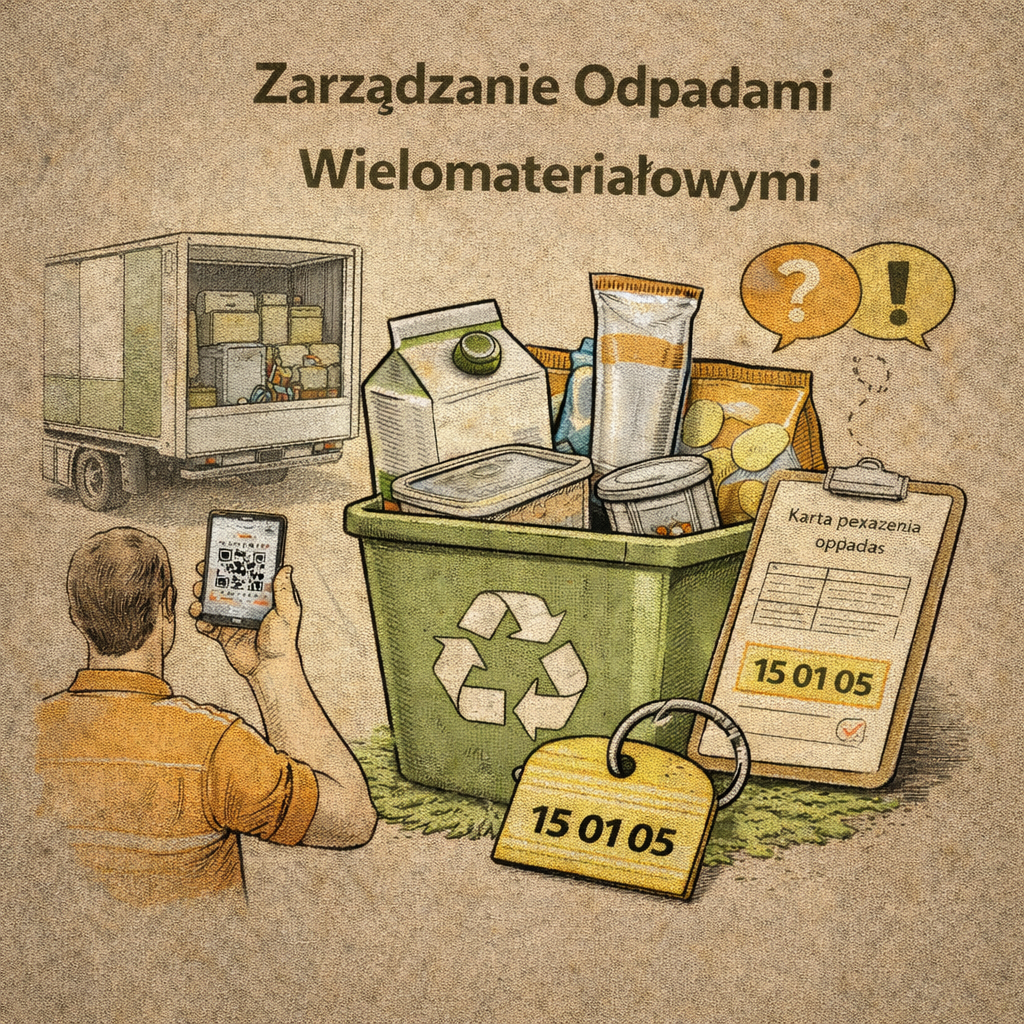
In today's world, where sustainable development i environmental protection are crucial, the management of multi-material waste takes on particular importance. These wastes, composed of two or more different materials, pose a real challenge to recycling systems due to their complex structure. They are classified under the waste code 15 01 05, which facilitates their identification and management in waste accounting systems.
In Poland, the management of this waste is regulated by various regulations, which aim to increase the efficiency of recycling and minimise the environmental impact. One of the key documents is Act on the management of packaging and packaging waste. It sets out the rules for the handling of multi-material packaging. This law, together with Decree of the Minister of the Environment of 22 November 2023, sets minimum levels of recovery and recycling that companies must meet.
In the context of waste management, the record-keeping system BDO plays a key role. Companies need to keep records of their packaging waste in this system, which allows better monitoring and control of the flow of waste. The waste code 15 01 05, assigned to multi-material waste, is an essential element of this system to enable its effective classification and management.
As environmental awareness grows and regulations become more stringent, management of multi-material waste will require innovative solutions and technologies. In the future, will it be possible to develop methods to treat this waste even more efficiently, while minimising its environmental impact?
Packaging and Waste Management Act
Act on the management of packaging and packaging waste is the legal foundation that governs the management of multi-material packaging in Poland. This law not only defines the principles of waste management, but also sets minimum levels of recovery and recycling that companies must meet. Order of the Minister of the Environment of 22 November 2023 further clarifies these requirements, with the aim of increasing the efficiency of recycling processes and minimising environmental impact.
The introduction of these regulations is a response to the growing challenges of managing multi-material waste, which is difficult to recycle due to its complex structure. The law aims not only to protect the environment, but also to promote sustainable development by supporting innovative solutions for recycling and reuse of materials.
As regulations become more stringent, companies need to adapt their processes to the new requirements, which can be a challenge, but also an opportunity to develop and introduce modern technologies. What innovations might emerge in the future to further improve the efficiency of multimaterial waste management?
BDO Inventory System and Waste Code 15 01 05
Record-keeping system BDO, or Waste Database, is a key tool in the management of packaging waste in Poland. Companies need to keep detailed records of waste in this system, which allows for better monitoring and control of waste flows. Waste code 15 01 05 is assigned to multi-material waste, enabling it to be classified and managed effectively.
BDO not only facilitates the identification and tracking of waste, but also supports companies in meeting the legal requirements for recycling and recovery of materials. The system enables more efficient waste management, helping to protect the environment and promote sustainable development.
As waste accounting and management technologies evolve, the BDO system could become an even more advanced tool to support companies in their sustainability efforts. What new features and opportunities might the future bring for the BDO system to further support the management of multi-material waste?
Sustainable Development and the Closed Economy
Nowadays, when sustainable development is becoming an increasingly pressing need, the closed-loop economy is gaining importance as a key element of environmental protection. This waste management concept focuses on recycling and reusing materials, which is essential to reduce our negative impact on the planet. In the context of multi-material packaging, the closed loop economy promotes innovative solutions that enable resource efficiency and waste reduction.
Multi-material packaging, despite its complexity, offers unique opportunities within a circular economy. Designing them for reuse and recycling is key to achieving sustainability goals. Will the future bring even more advanced technologies to fully integrate multi-material packaging into the closed loop? Time will tell!
The role of multi-material packaging in environmental protection
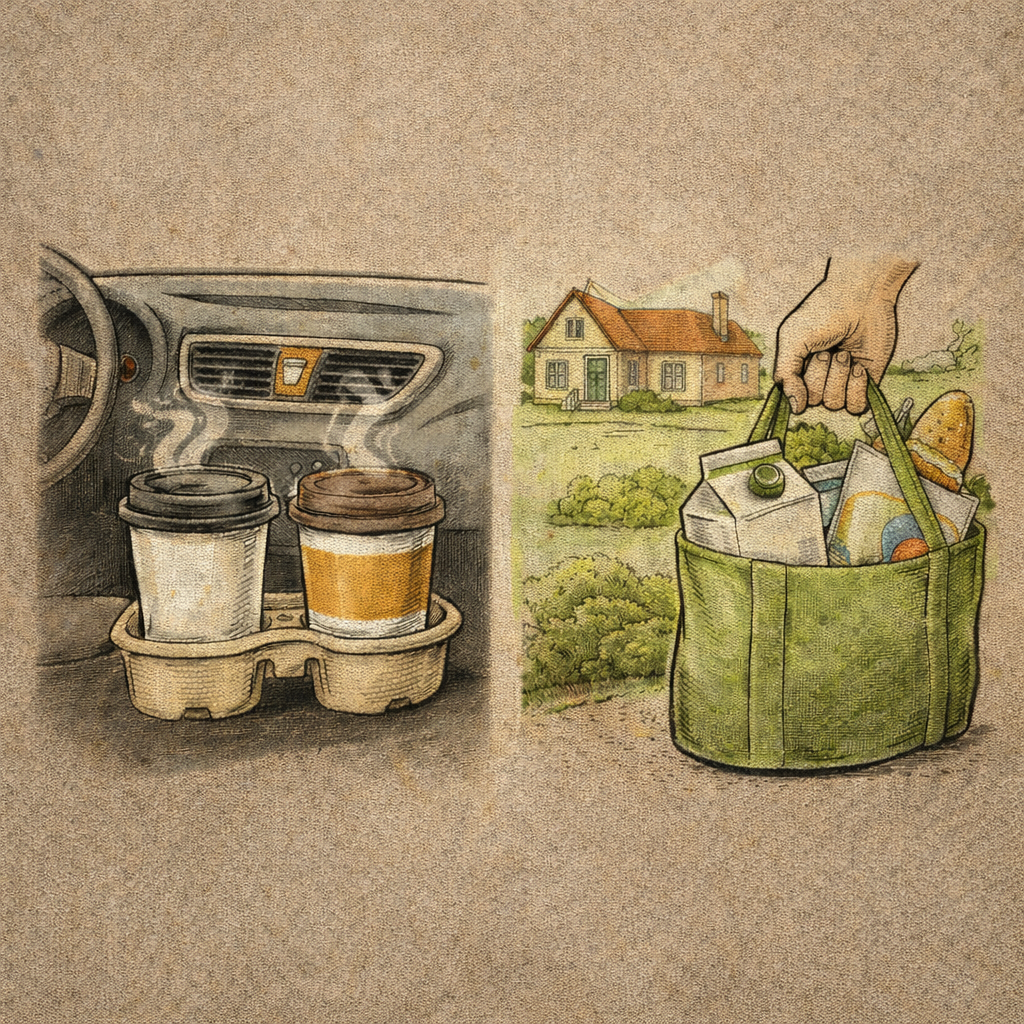
Multi-material packaging plays an important role in environmental protection, especially in the context of sustainable development. With proper management, this packaging can make a significant contribution to reducing waste and conserving natural resources. Sustainability promotes the proper management of multi-material packaging, which is key to minimising its environmental impact.
In practice, this means that multi-material packaging should be designed with its entire life cycle in mind, from production to recycling. Introducing innovative solutions that allow for easier recycling and reuse of materials is essential for achieving sustainability goals. What new technologies might emerge in the future to further improve the efficiency of multimaterial packaging management? This question remains open!
Waste reduction strategies
Reducing waste is one of the key elements of sustainability. Waste reduction strategies include a variety of approaches that aim to minimise waste production at each stage of the product life cycle. Here are some of them:
- Purchase of products without packaging - directly reduces the amount of waste generated.
- Adjustment of pack size - to actual needs, thus reducing excessive material consumption.
Introducing such strategies not only promotes environmental protection, but can also bring economic benefits to businesses. What innovative approaches can be introduced to further reduce waste in the future? It's a challenge waiting for creative solutions!
Legislation and Supporting Organisations
In today's world, where sustainable development i environmental protection are at the top of their game, regulations for multi-material packaging play a key role. In Poland, these regulations are defined by the Packaging and Packaging Waste Management Act, which sets out the rules for the handling of this packaging. The aim of these regulations is not only to protect the environment, but also to promote sustainable development by supporting innovative solutions for recycling and reuse of materials.
One of the key documents in this area is Regulation of the Minister for the Environment of 22 November 2023, which specifies minimum recovery and recycling levels for multi-material packaging. This regulation responds to the growing challenges of managing multi-material waste, which, due to its complex structure, is difficult to recycle. The introduction of these regulations aims to increase the efficiency of recycling processes and minimise the environmental impact.
As regulations become more stringent, companies need to adapt their processes to the new requirements. This can be a challenge, but also an opportunity to develop and introduce modern technologies. What innovations might emerge in the future to make the management of multi-material waste even more efficient?
Regulation of the Minister of the Environment and Other Regulations
Regulation of the Minister for the Environment of 22 November 2023 is the key document regulating the management of multi-material packaging in Poland. It defines the minimum recovery and recycling levels that must be met by companies handling this packaging. The introduction of such requirements is necessary to meet the growing challenges of environmental protection and sustainable development.
Multi-material packaging, due to its complex structure, poses a challenge to recycling systems. The regulation of the Minister of the Environment aims not only to increase the efficiency of these processes, but also to promote innovative solutions that can contribute to better waste management. This not only reduces the amount of waste, but also saves raw materials, which is crucial in the context of sustainable development.
As recycling technologies develop, this regulation may become even more relevant, supporting companies in their sustainability efforts. What new technologies may emerge in the future to further improve the recycling efficiency of multi-material packaging?
 Polski
  English (UK)
  Deutsch
  Українська