WIOŚ (Provincial Environmental Inspectorate) is the regional body of the „Environmental Inspectorate” responsible for controlling compliance with environmental regulations by entrepreneurs.
The structure of the Inspectorate includes the Main Inspectorate (GIOŚ) and 16 WIOŚ. The main tasks of the WIOŚ include checking whether companies comply with the terms and conditions of environmental decisions (e.g. emission permits, waste permits), and conducting state monitoring of the state of the environment. The inspectors of the WIOŚ may stop the activity of a company violating the regulations or impose penalties (e.g. financial)
for serious infringements.
When and whom does the WIOŚ inspect?
The WIOŚ supervises every use of the environment by a company - regardless of industry or size. For example, industrial, agricultural, municipal or service establishments are inspected, which draw water, generate waste, emit gases or noise. The inspection checks any aspect of environmental use: air emissions, water and wastewater management, waste management, even packaging marketing
or plant and animal husbandry. Large industrial plants as well as small sole traders are subject to surveillance. Farmers or local authorities may also participate in the inspection.
Controls may be planned (according to an annual plan, subject to risk assessment) or off-plan. In the case of a scheduled inspection, the trader receives advance notice (usually 7-30 days before the visit). Intervention or requested inspections start unannounced - The inspector arrives in response to a complaint, suspected pollution, failure or other violation. According to the EIA Act, facilities with a high risk of failure are inspected at least once a year and those with a moderate risk at least once every three years.
Types of inspections of the WIOŚ
The WIOŚ conducts scheduled and unscheduled inspections. The table below describes the basic types:
| Type of control | Characteristics |
| Planned inspection | Carried out according to an annual schedule based on the risk categorisation of the business. Prior to commencement, the company receives official notification (7-30 days prior to inspection). Priority is given to large establishments with a significant impact on the environment. |
| Control on request | Non-scheduled inspection upon request administrative bodies (e.g. municipalities, police or construction supervision) or before certain waste decisions are issued. The VIO then checks specific signals (e.g. new waste generation notifications). |
| Intervention control | Unannounced inspection in response to complaints, alarms or suspected violations (e.g. environmental pollution, accidents). Inspectors may enter into the area without prior notice in order to quickly verify reported violations. |
What is the step-by-step inspection process
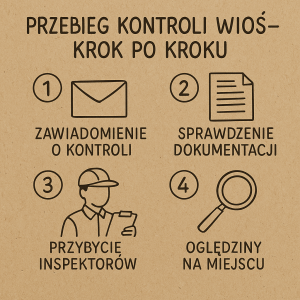
Notification and preparation of documents
Prior to a scheduled inspection, the VIO sends a written notice containing the scope and date of the visit (at least 7 days before). In the case of an emergency inspection or upon request, the company usually does not receive the information in advance. The entrepreneur should collect all necessary environmental documents.
Among the most important are: current environmental permits (e.g. for air emissions, waste management and water and sewage management), BDO system waste record and transfer sheets and annual environmental reports (e.g. KOBiZE, emission reports). These documents should be organised and easily accessible.
A visit by inspectors - what are they checking?
The visit starts with the inspectors presenting their official ID card and authorisation with the scope of the inspection. This is followed by a visual inspection of the plant and verification of documentation. The inspectors thoroughly check the company's environmental infrastructure: including waste storage areas, boiler houses and other installations causing emissions, water intakes and wells and sewage treatment plants. Environmental protection equipment (filters, separators, dust collectors) and noise sources are also inspected
or odours. During the site visit, samples (e.g. soil, sewage) and measurements (noise, emissions) may be taken. At the same time, the inspectors verify the documentation - such as whether environmental permits are respected and the data reported in the BDO (waste record/export cards, reports) agree
are in line with the facts.
Protocol and follow-up
On completion of the inspection, the inspector shall draw up control proto-cut describing the course and results of the inspection. The protocol contains a description of the entity's activities, the infringements found and the measures (e.g. penalties) imposed during the inspection. One copy of the protocol is given to the inspected company. The entrepreneur may sign the protocol and submit comments to it (e.g. indicating the remedied infringements) or refuse to sign and send reservations within 7 days from the end of the inspection. The VIO must respond in writing to all comments.
If irregularities are found during the inspection, the VIO shall issue a follow-up order, in which he or she sets remedial obligations (e.g. removal of waste, adaptation of the installation) with a deadline for their implementation. If necessary, the inspector may also impose administrative fine or take legal action. Serious failings (e.g. lack of environmental decisions,
significant pollution) can result in sanctions of up to PLN 1 million and criminal proceedings.
How to prepare for an inspection - practical tips
- Take care of the environmental documentation: Ensure that all documents are up to date and complete. Check that waste records (BDO) is carried out in accordance with the facts, and the permits held (emissions, water, waste) are valid. Complete list of waste codes,
up-to-date contracts with consignees and waste transfer notes are key elements of a ready-made
to present. - Carry out an internal audit: Before the audit, carry out an independent or external self-audit. An environmental audit will identify gaps - such as out-of-date permits or inaccuracies
in the documentation - and correct them in time. - Put waste management in order: Ensure that containers are properly labelled and secured
for waste and clear signage on company premises. Store waste in accordance with the time limit,
and keep contracts with waste collection companies up to date and complete. - Train the team: Notify staff of procedures in the event of an inspection. Ensure that those responsible for BDOs and environmental installations know their responsibilities and can point out to inspectors where records are kept.
- Prepare the site and installations: Ensure cleanliness around waste storage areas and proper signage (e.g. „hazardous waste storage”). Check the condition of environmental equipment (separators, filters, etc.) and remove waste that has been deposited for too long.
- Have a contingency plan: For an unexpected inspection occurring outside working hours, prepare the person
to represent the company and have access to records and key premises. Inspectors have the right to enter without notice - so „always ready” is the best strategy.
The most common entrepreneurial mistakes
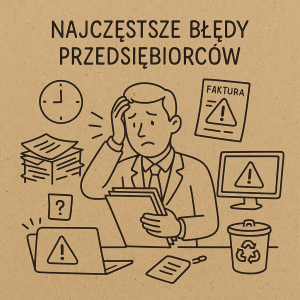
- No BDO registration or incomplete waste records: Incorrect record keeping
(no entry in the BDO, outdated record/export cards) is one of the most frequently detected deficiencies. For the lack of records, the legislator provides a penalty of up to 10 000 zł. - Outdated environmental permits: Operating without the required permit
(e.g. emissions without a gas permit) can result in a penalty of up to 1 000 000 zł (Article 193 AfterŚ). Exceeding permit conditions (e.g. emission limits or waste quantities) is punishable by penalties
up to 500 000 zł. - Improper labelling and storage of waste: Companies often make mistakes such as not having a waste code on the label, not having waste transfer documents or storing waste illegally for longer than the permitted time. These failures lead to sanctions and can increase the suspicion of inspectors.
- Absence or poor organisation of reporting: Failure to submit environmental reports (e.g. annual reports to BDO, KOBiZE reports) is a serious mistake.
Failure to report to BDO may result in a decision with a financial penalty for the mere failure to report.
Summary
A WIOŚ inspection is the process of checking a company's compliance with environmental law. Knowledge of the successive stages of the inspection and good preparation of documentation significantly facilitate its course. Properly maintained documents and proactive cooperation with inspectors act
in favour of the company.
If you want to make sure your company is ready for any WIOŚ inspection, contact our team. We offer environmental audit and comprehensive advice - we will help you sort out all your obligations (including BDOs and permits) and minimise the risk of penalties. Take care of the environment - it's the basis for a safe business!